
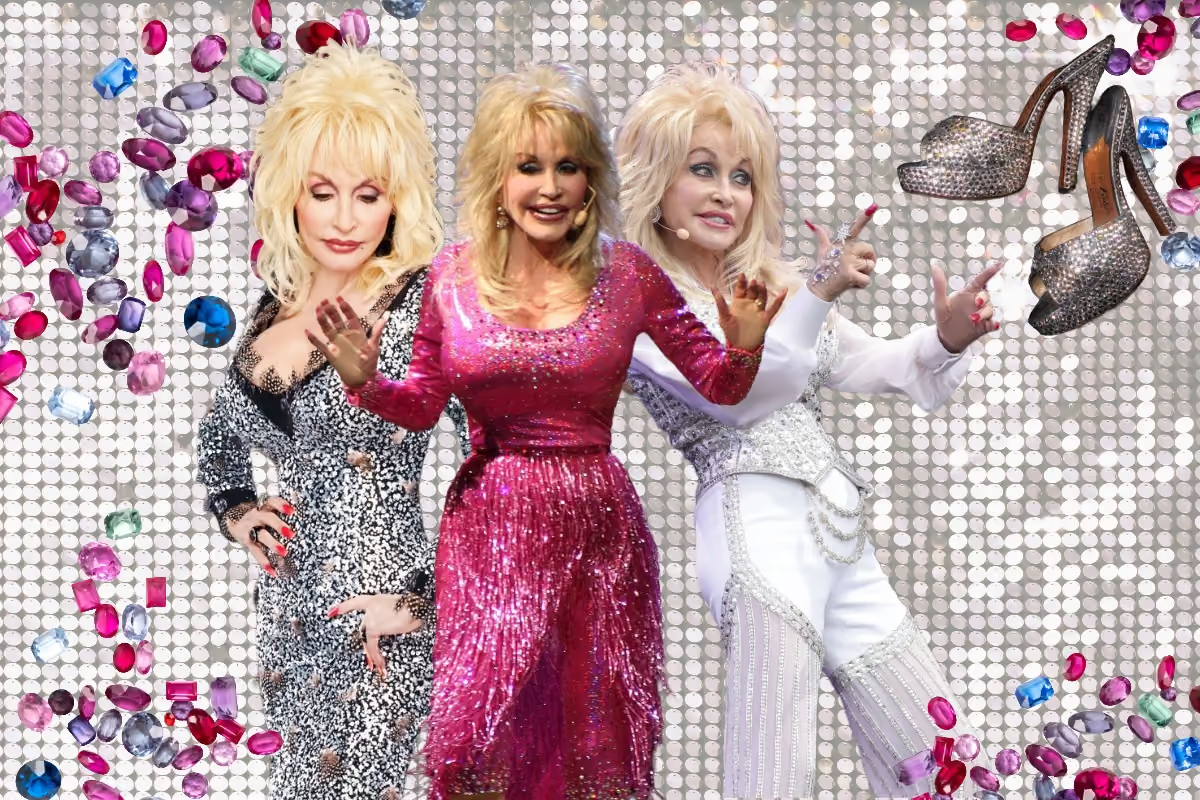

Dolly Parton died on August 25 in Nashville at 80 years old, after a brief battle with cancer, her family confirmed. The news lands with the particular weight reserved for people who feel less like celebrities and more like relatives — the aunt everyone claims, the voice that soundtracked kitchens and car rides across generations and genres. The inspiration for Drag performers, Halloween costumes and emerging country artists alike. Tributes are already pouring in from musicians, politicians, and fans who never met her but somehow felt they had.
Parton spent nearly seven decades in public life without ever losing the plot of who she was: a poor kid from a one-room cabin in the Great Smoky Mountains who decided, early and permanently, that she would rather be seen than overlooked. “It costs a lot of money to look this cheap,” she liked to say, and the joke did a lot of work. It disarmed critics before they could sharpen their knives, and it smuggled in a serious point, that her aesthetic, dismissed for decades as cartoonish or excessive, was in fact a meticulously engineered act of self-authorship. Few American public figures have used clothing as deliberately, or as successfully, as a tool of narrative control. One that became a signature and an extension of her identity to express her authentic self.
That control extended well beyond the stages where the star performed. Parton’s Imagination Library, launched in 1995 in honor of her father, who never learned to read, has mailed free books to children from birth to age five in participating communities across the United States, the United Kingdom, Canada, Australia, and Ireland, reaching well over 200 million books distributed by the time of her passing. It is one of the most successful literacy initiatives ever built by a single individual.
Parton was, just as consistently, an LGBTQ+ ally decades before it was safe or fashionable for a country star with a conservative fan base to be one. She wrote “Travelin’ Thru” for the film Transamerica, championed drag culture at a moment when doing so risked her career in Nashville, and never wavered even as some corners of her audience pressured her to. Her answer was usually some version of: I was raised to love my neighbor, and I don’t get to pick who that is.
It is worth sitting with the fact that a woman who built an empire on exaggerated femininity — big hair with a rich collection of wigs made of natural hair, big curves embellished with rhinestones — was also one of the plainest-spoken defenders of the idea that gender presentation is a costume everyone gets to choose for themselves. Drag and Dolly were never in tension. They were, in a sense, the same argument.
All of which is to say: the fashion cannot be separated from the woman, and the woman cannot be separated from the fashion. Parton often described her look as a costume she put on to play “Dolly,” distinct from the woman underneath who preferred, by her own account, a much plainer version of herself at home. But that framing, repeated so often it became a kind of shorthand in profiles of her, undersells how load-bearing the costume actually was. The character and the person shared every value that mattered: the generosity, the plainspokenness and the refusal to punch down.
What follows is a look back at the looks — the ones that, taken together, built one of the most coherent and enduring style languages in American pop culture.
The Coat That Started It
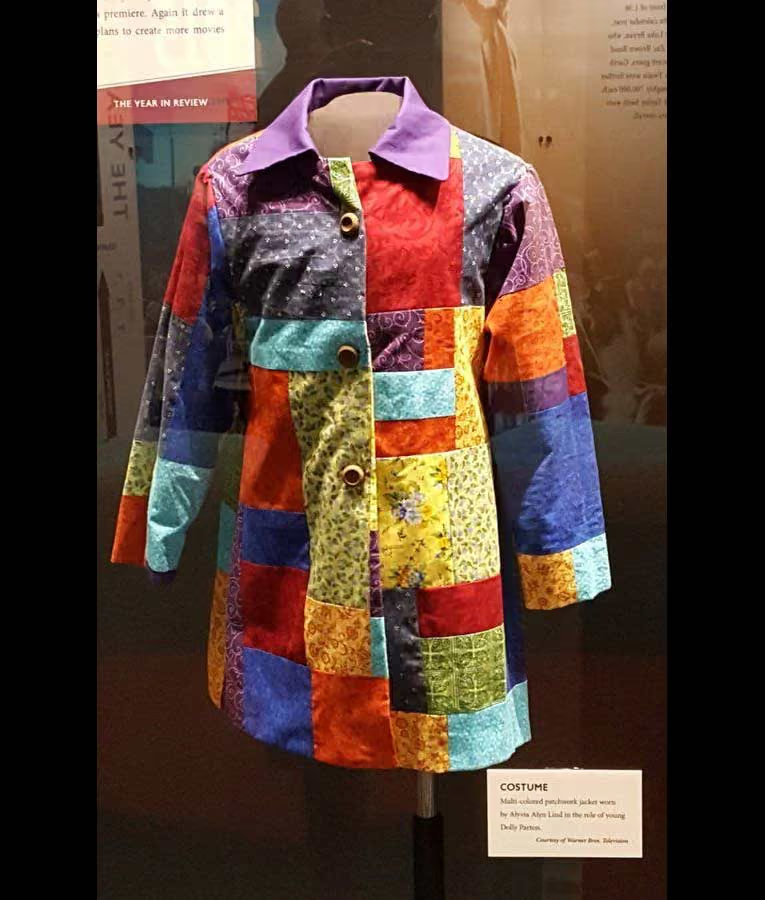
Long before rhinestones, there was a coat sewn from rags. Parton’s mother, Avie Lee, stitched together a patchwork coat for her out of scrap fabric donated by neighbors, adding a button at Dolly’s request to make it look, in her young mind, more like Joseph’s coat of many colors from the Bible story her mother told her while sewing it. Parton wore it to school proudly, only to be mocked by classmates who saw rags where she saw color. She turned the memory into “Coat of Many Colors,” the 1971 song she has repeatedly called the favorite of everything she ever wrote, and later into a children’s book and a television film.
It is worth treating that coat as the true origin point of everything catalogued below, not just a sentimental footnote. The lesson she said she took from it — that something built from nothing, stitched with love, could be worn as a declaration rather than an apology — is the same logic that governs the rhinestone jumpsuits and sheer-illusion gowns that followed. She spent a childhood being taught that visible poverty was something to be ashamed of, and she spent an entire career answering that lesson by making visible extravagance impossible to look away from. The coat and the rhinestones are the same argument, told fifty years apart.
A Signature Built, Not Discovered
Parton’s style has always been credited to close collaborators, most notably costume designers Lucy Adams and Steve Summers. But the philosophy behind it was hers alone: hyper-femininity played completely straight, theatrical camp treated with couture-level craft, and a commitment to sparkle so total it became its own form of armor.
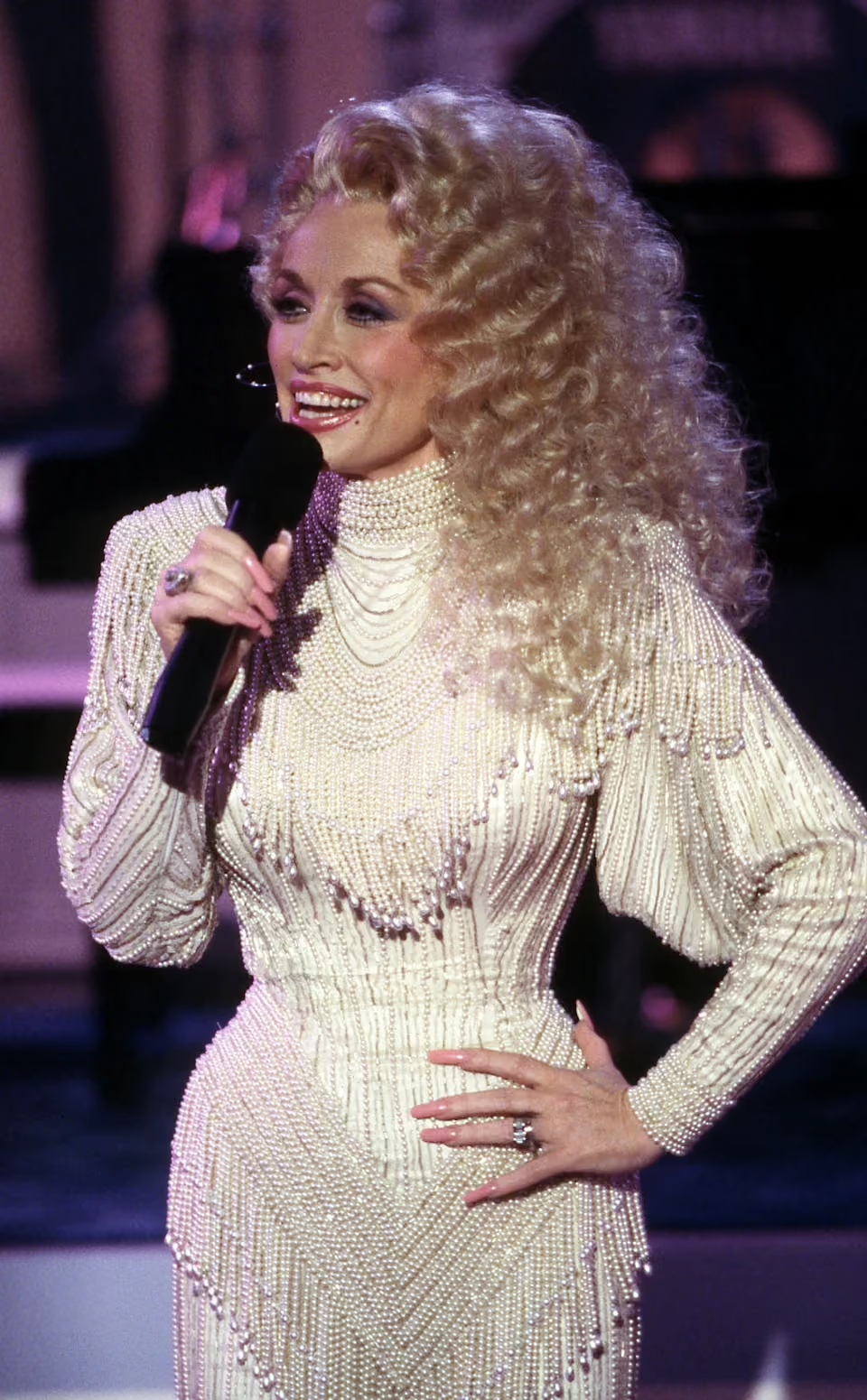
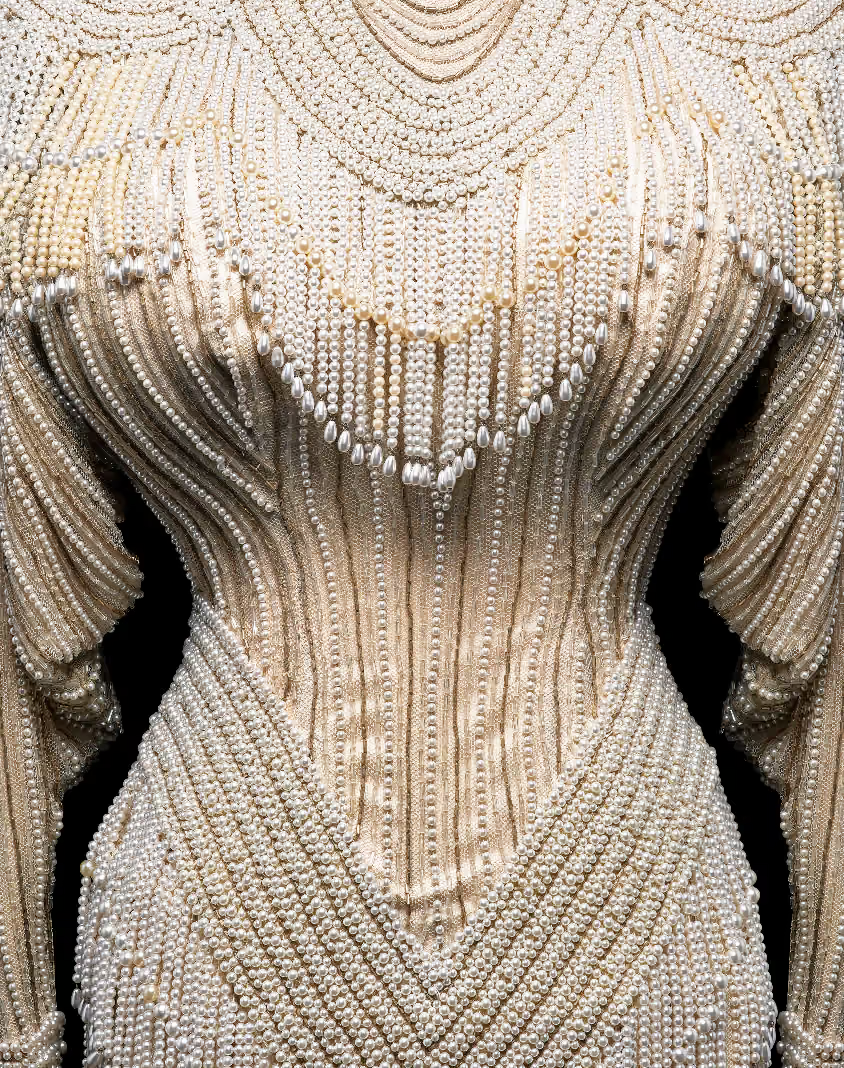
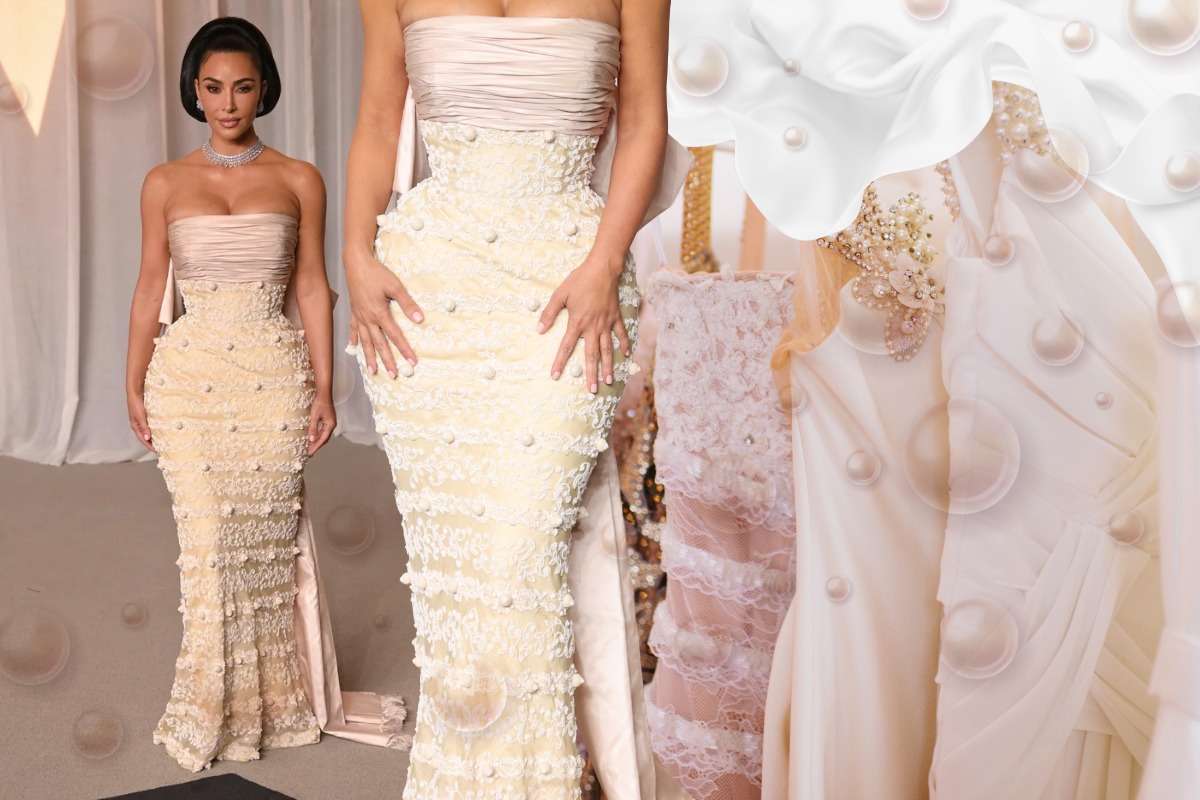
The “Dripping Pearls” Gown (1987). Designed by Tony Chase for an episode of her variety show Dolly, this white, curve-hugging gown was strung with cascades of faux pearls across the bustline and sleeves. Worn while she sang “Do I Ever Cross Your Mind,” it was Old Hollywood glamour run through a country-pop filter. The dress is evidence that early in her television career, Parton understood texture and drama as tools of emotional amplification, celebrating her body and celebrating femininity.
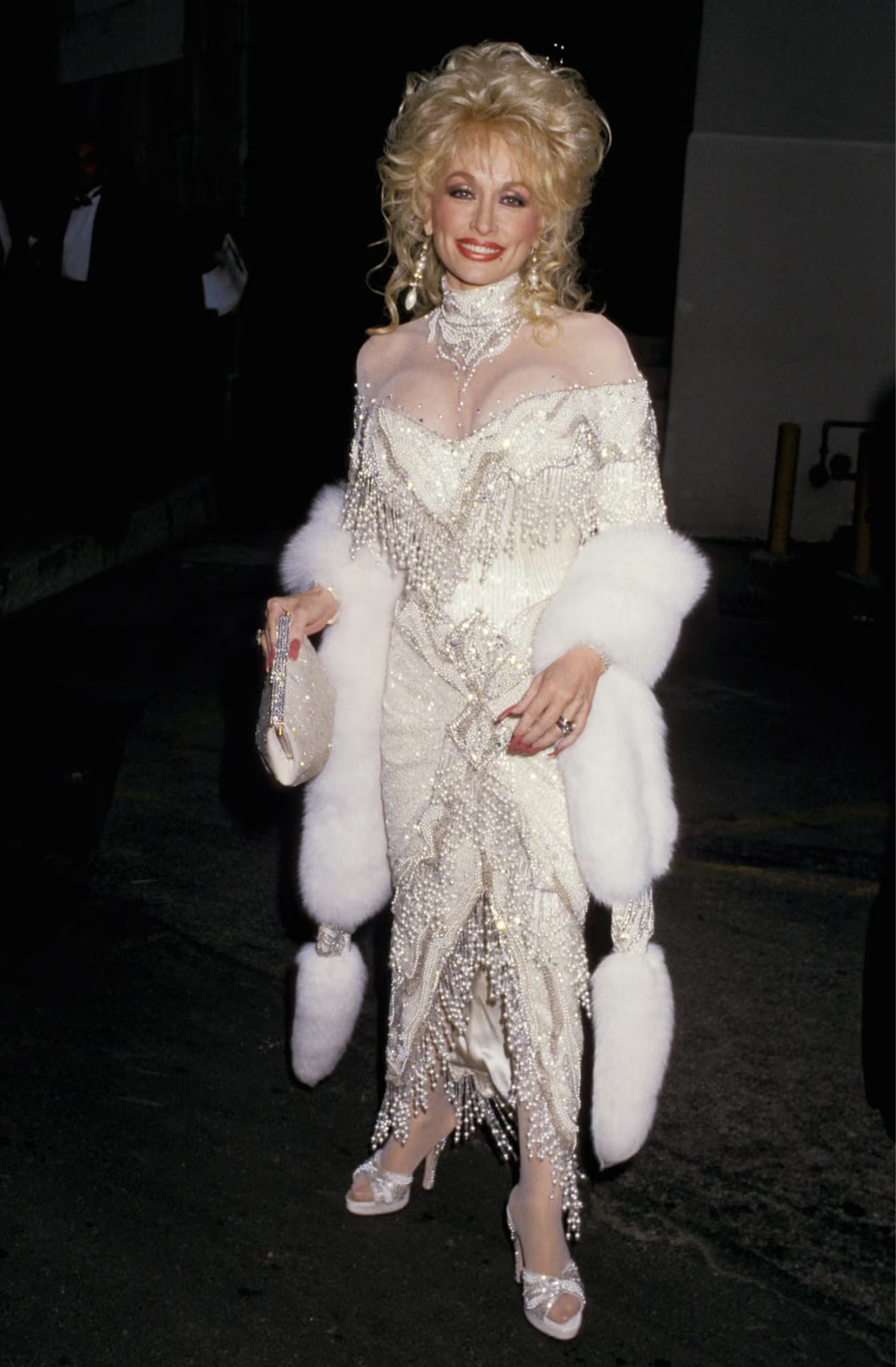
The White Pearl and Rhinestone Dress for the People’s Choice Awards (1988). A floor-length gown encrusted in thousands of beads, worn with a fur scarf and a bedazzled clutch. The full white look with so much rich texture is both sophisticated and playful.
The Jade Green Jumpsuit (1974).
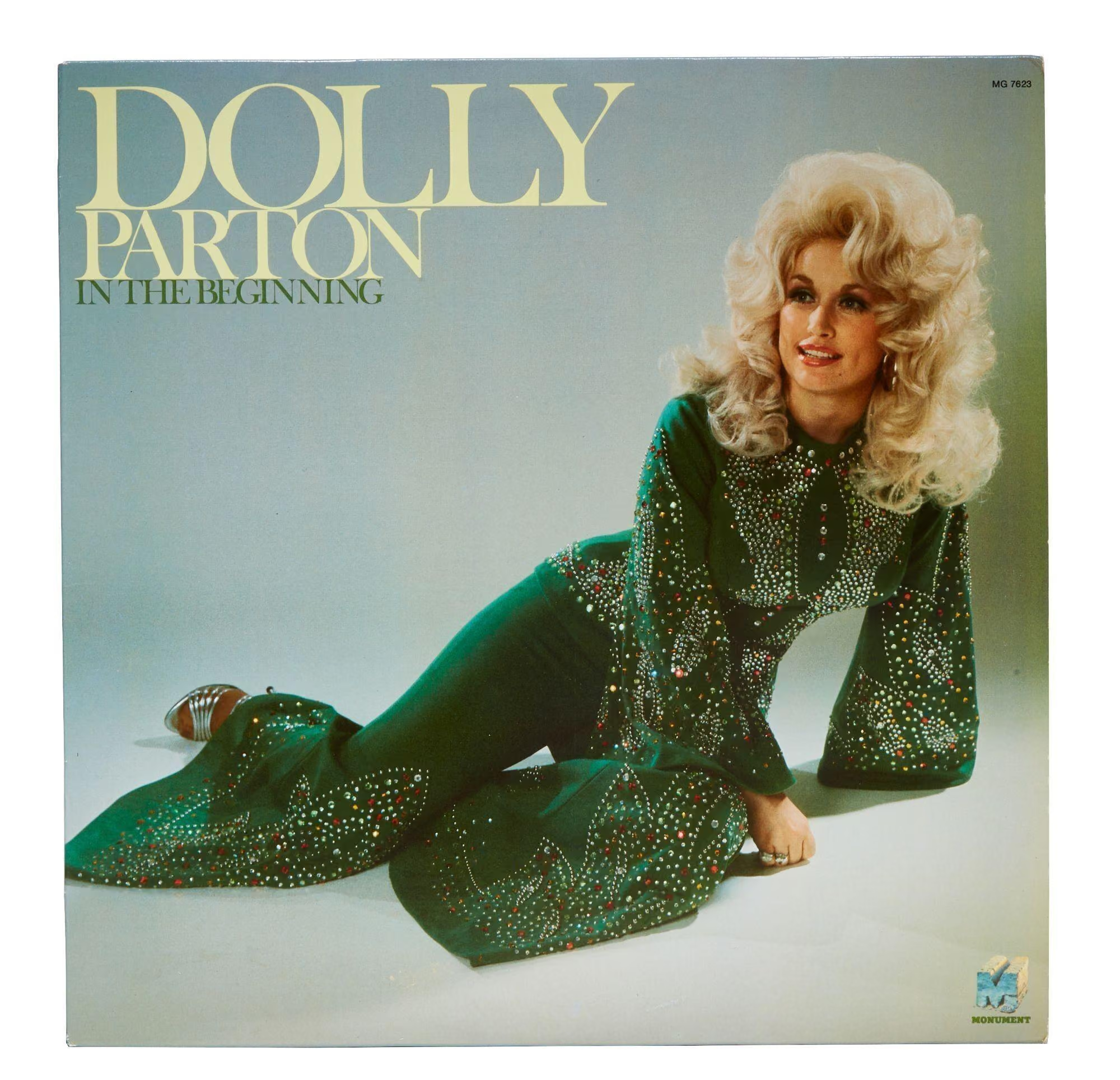
A peplum-waisted, bell-sleeved, bell-bottomed jumpsuit studded with brass tones and iridescent glass, worn onstage at WBAP’s “Country Gold” and later immortalized on the cover of her 1978 album In the Beginning. This is the look that reveals how early Parton had already solved the problem most performers spend careers chasing: how to be maximalist and still look intentional. Every stud had a job and it worked in harmony with the energy of the color and the movement of the silhouette.
The 1977 Grammys “Butterfly” Pink Jumpsuit.
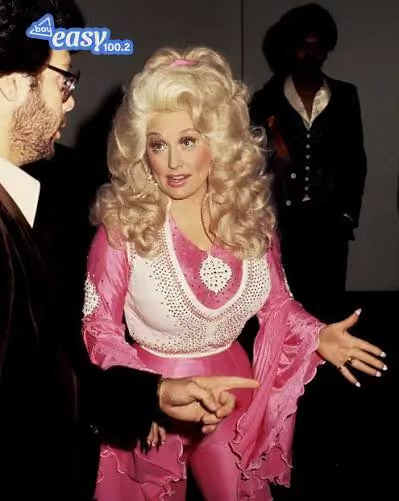
Hot pink, rhinestone-covered, flared at the cuffs, with butterfly motifs worked into the fabric. The butterfly was already Parton’s personal emblem by this point — it would later become the branding backbone of Dollywood itself — and this jumpsuit marks the moment the symbol and the silhouette fully merged. It also signaled a practical shift: bedazzled jumpsuits gave her the mobility a gown couldn’t, without sacrificing an ounce of spectacle.
The Dallas Cowboys Cheerleader Uniform (2023).
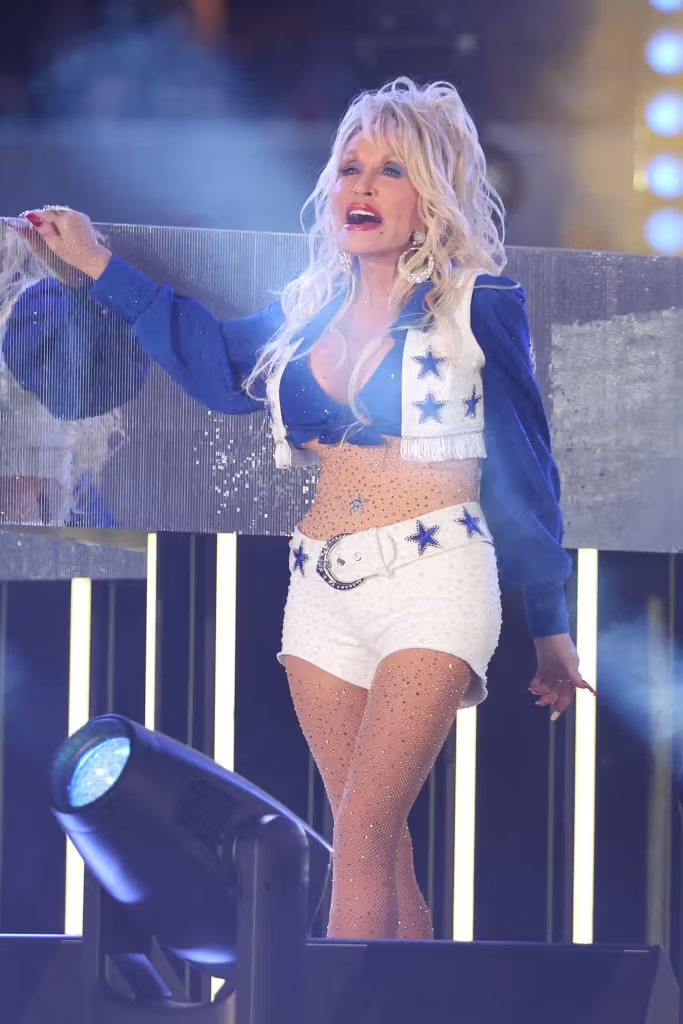
Image Courtesy of Country Living Magazine At 77, Parton performed a custom, rhinestone-loaded replica of the classic Dallas Cowboys Cheerleader uniform during an NFL Thanksgiving halftime show — white crop top, star-embellished navy vest, white shorts, and a sheer, skin-toned bodysuit underneath for both coverage and shimmer. It went viral within hours. It was about the energy and the confidence of the performer wearing the clothes during the performance. It was about showing skin and challenging ageist norms about fashion, cheerleaders, and entertainers in general. More than any single look on this list, it captured what made Parton’s late-career style so disarming: total self-awareness paired with a total refusal to shrink.
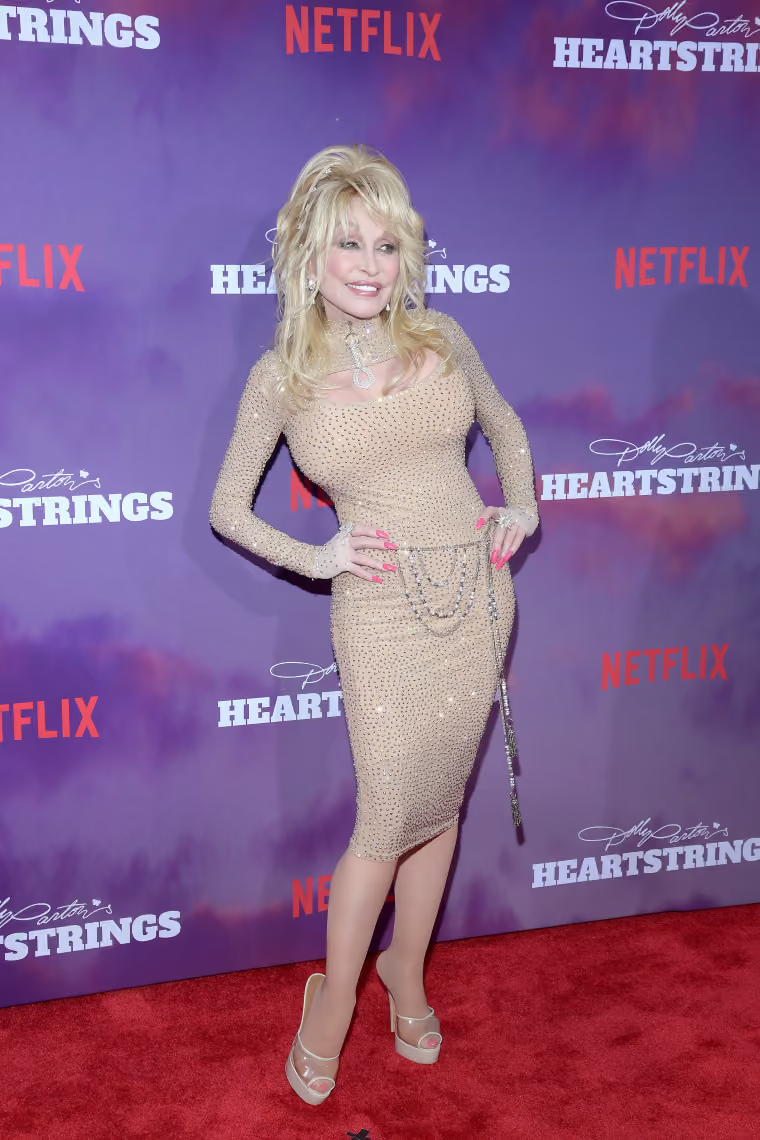
The 2019 Nude Dress for the premiere of Dolly Parton's Heartstrings at Dollywood. Parton wore a nude-colored, rhinestone-studded midi dress featuring a cutout bodice and a chain belt.
The Rock & Roll Hall of Fame “Rockstar” Look (2022).
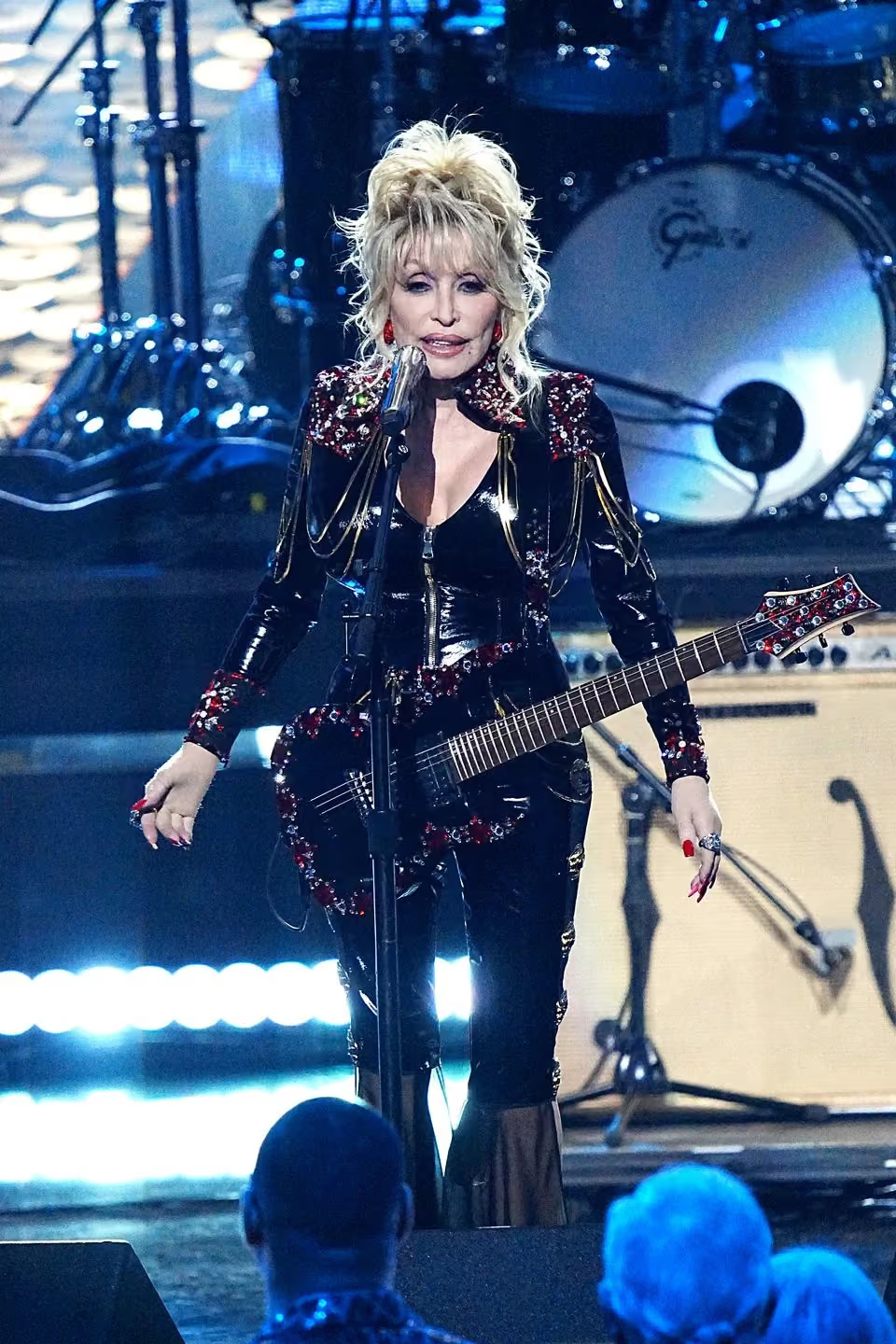
Black leather trousers, a lace-up corset top, heavy silver chains, followed onstage by a switch into a rhinestone guitar dress. Inducted into an institution that had little historical use for country music, Parton met the moment by reinventing her own silhouette just enough to signal range without abandoning the corsetry and sparkle that made her legible as herself. It was costume as argument: I contain multitudes, and I always did.
The Elements That Made It a Language
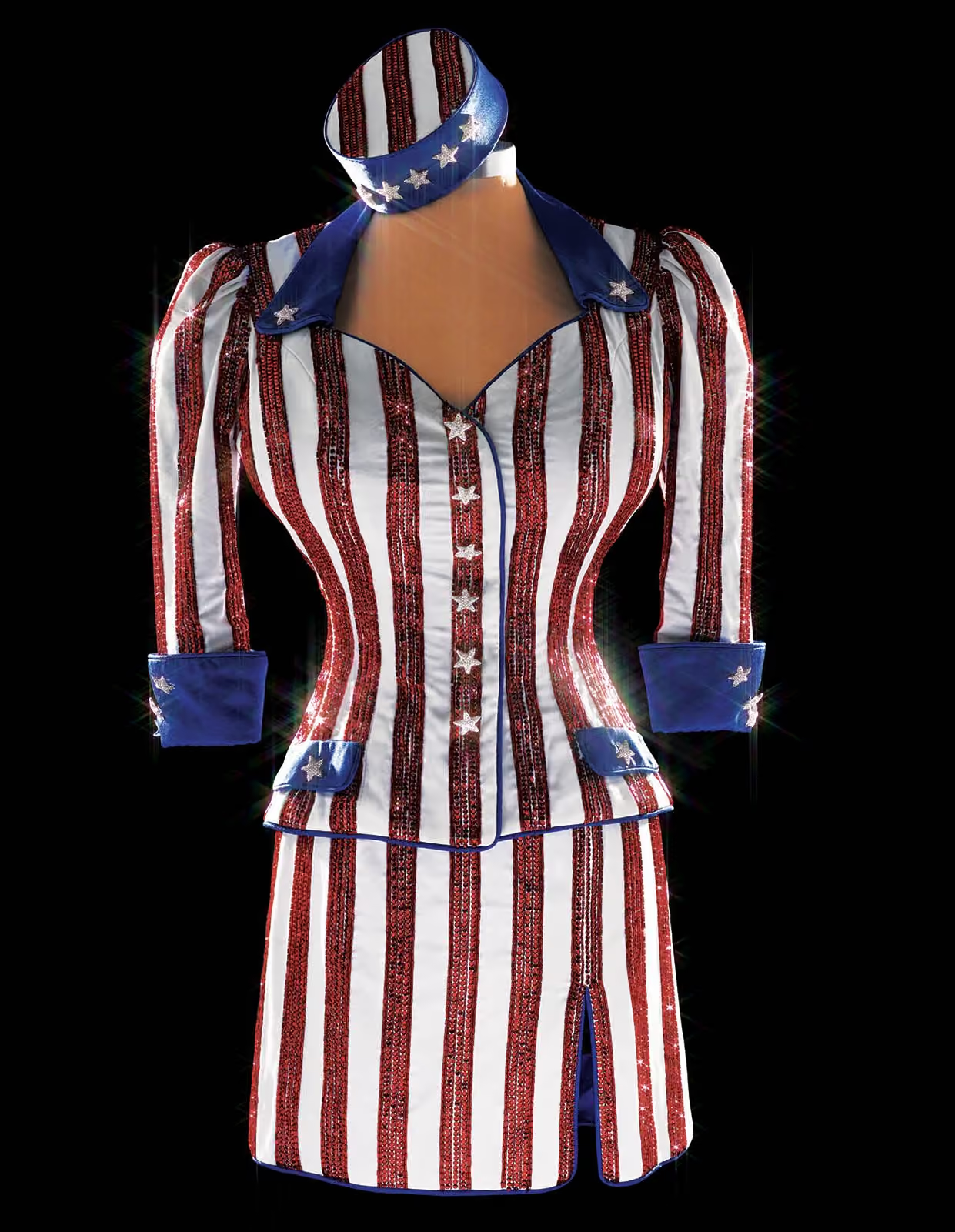
Look across seven decades of these choices and a small number of recurring principles emerge, and they are worth naming plainly because they explain why the style never dated the way so much celebrity fashion does.
The silhouette was engineered and it was never incidental. It was highly structured corsetry and waist-cinching cuts built specifically to work with her proportions, reused and refined across five decades rather than chased and abandoned with each trend cycle. The nude-illusion mesh technique, sheer fabric heavily beaded to suggest sparkle directly on skin, let her push toward maximalism without ever losing a sense of control over the effect. And there was a coherent, near-obsessive commitment to monochromatic sparkle — matching gowns to guitars, mic stands, and stage sets — that turned every appearance into a single, unified image rather than an outfit plus a backdrop.
None of this reads as “trendy” in the way fashion journalism usually means the word, and that is precisely the point. Parton was never chasing what was current. Dolly Parton built her own language in fashion, her own form of wearing, upcycling, styling and expressing herself. She created her set of rules she wrote once, early, and then executed with increasing craft for the rest of her life. That is a different kind of fashion achievement than the one usually celebrated in this industry, which prizes reinvention and unpredictability. Parton’s genius ran the other way: extreme consistency, executed at an ever-higher level of technical skill, until the style became so synonymous with her that it stopped being analyzed as fashion at all and started being understood as identity.
It is also worth noting how much technical labor sat underneath the apparent effortlessness of the look. Corsetry that holds a silhouette for a two-hour concert without restricting the diaphragm of a singer is a genuinely difficult engineering problem, one her longtime team solved and re-solved across changing body types, changing decades, and changing stages. The wig work alone, made of real hair and restyled to accomplish different styles, each built to a specific structural spec.
Why the Legacy Outlasts the Wardrobe
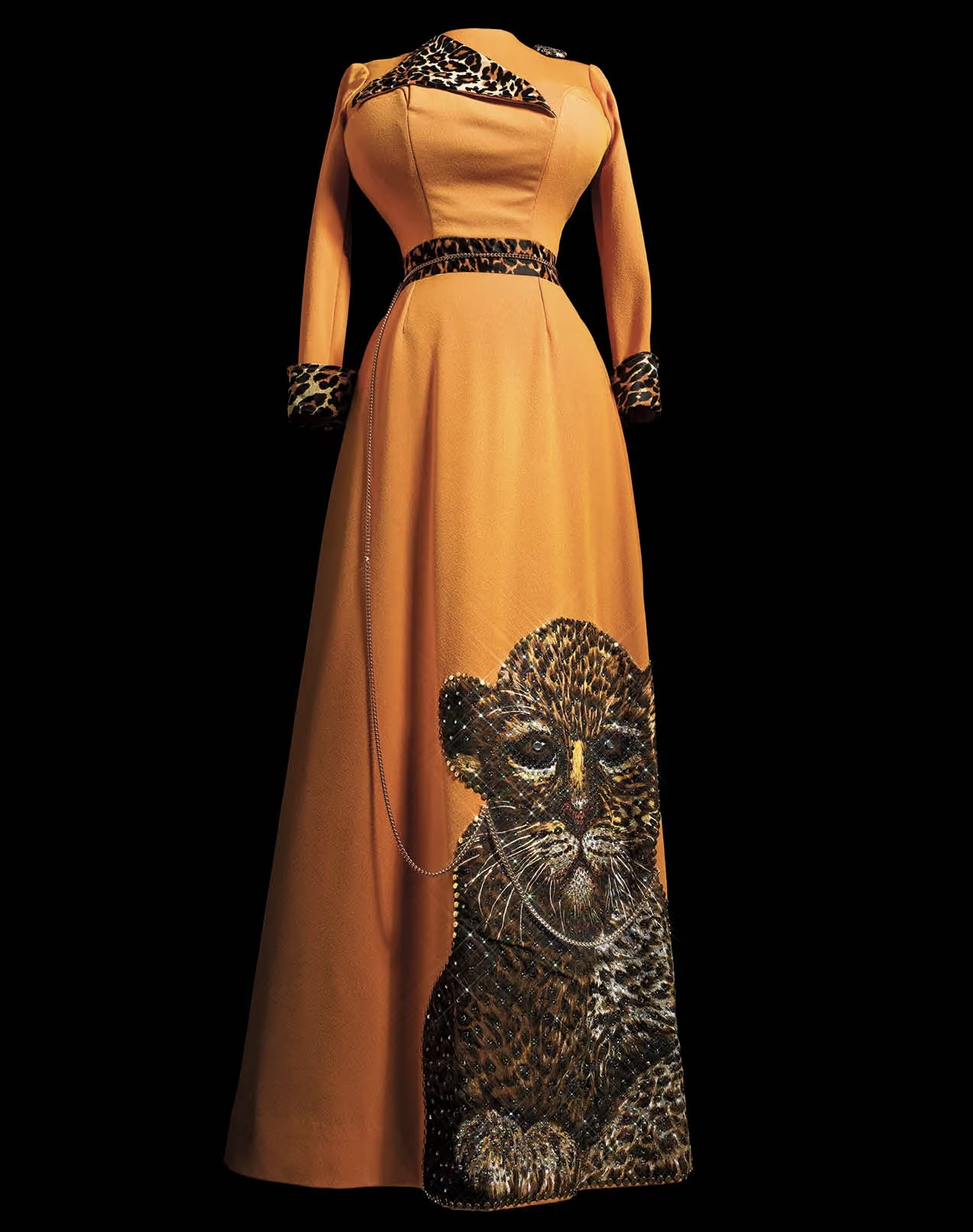
It would be easy to file Dolly Parton’s fashion under camp and leave it there. Rhinestones are a punchline, and wigs the gimmick. But that reading would not crash the surface of the fashion language the legendary figure built. She used a hyper-feminine, exaggerated silhouette to hold enormous cultural authority in rooms across country music, network television, the Rock and Roll Hall of Fame, and the halftime show of America’s most-watched sport. These were spaces that were not built to hand authority to women who looked like her. The fashion functioned not as a distraction but as a delivery mechanism of the message she conveyed. That is also why her activism and her aesthetic were never really separate stories, even though they get covered that way. A woman who spent her career insisting on the right to be as much herself as possible — as sparkly, as curved, as loud, as sincere — was always going to end up standing for other people’s right to the same thing, whether that meant a child in Appalachia getting a book in the mail or a drag performer getting a standing ovation at a Dolly Parton show. Seven decades on, and on the day the world lost her, that remains the throughline: an artist who understood, before almost anyone else in American popular culture, that looking exactly like yourself — at full volume, without apology — is its own form of politics.
.avif)