
Two versions of one night
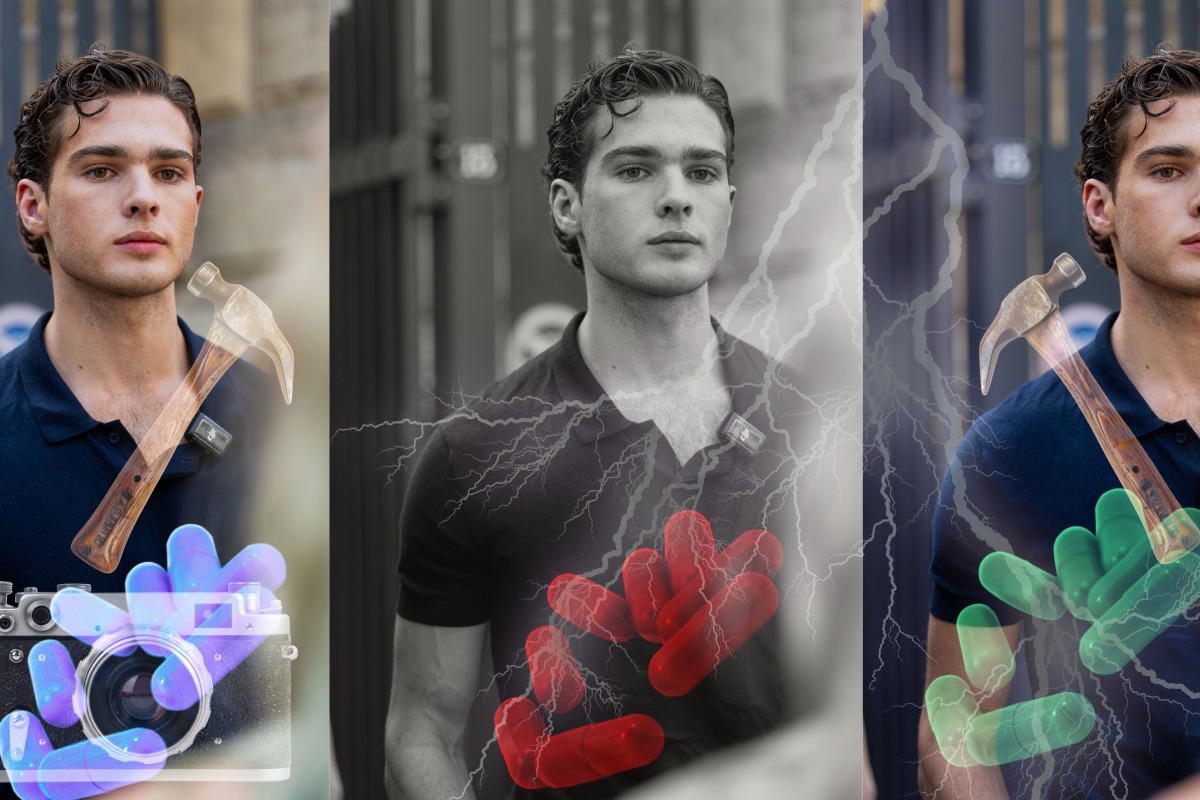
On the evening of Tuesday, April 14, Braden Peters, known online as Clavicular, was livestreaming on Kick from a bar in Miami's Brickell neighborhood when his head slumped forward. A friend asked whether he wanted an Adderall. Moments later the stream went dark, and a Miami-Dade dispatcher could be heard calling in a "20-year-old male overdose" at that address.
The headlines wrote themselves. Peters had spoken openly about using crystal meth to stay lean, so a suspected overdose surprised almost no one. His own publicist confirmed it to the press, then reportedly quit days later because Peters would not take his health seriously. Within a day of leaving the hospital, Peters was at a club opening.
By summer he was telling a different story. In a July interview with Sean Hannity, he said he had not overdosed at all. He had simply drunk too much on an empty stomach, he claimed, and the media had inflated the episode because it went viral.
Which version is true matters less than what both reveal. Peters is 20 years old, and his body is the product he sells. Either he nearly died on camera, or he let the world believe he did. Both kept people watching.
What looksmaxxing is
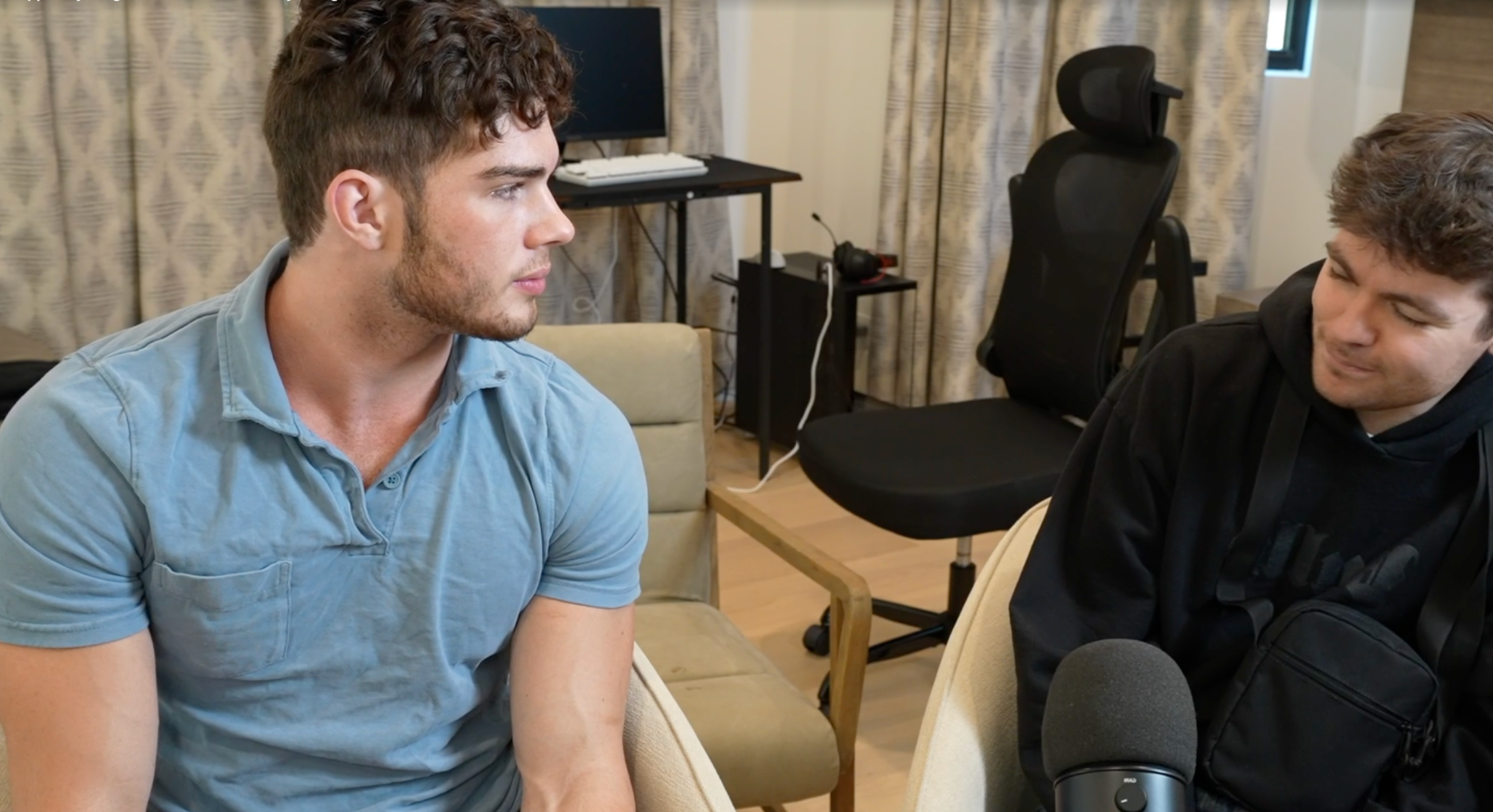
Clavicular speaking about GLP-1 with a guest during a Kick livestream. Image Courtesy of Clavicular.
Peters is the most visible face of looksmaxxing, a framework for optimizing physical appearance built on one belief: that a man's worth, status and desirability are determined mostly by how he looks.
The movement predates its TikTok fame. It grew on message boards where Peters posted so often he became a moderator, before short-form video carried its vocabulary into the mainstream. That vocabulary borrows the authority of math and medicine. Practitioners invoke the golden ratio, a proportion long and loosely linked to ideal beauty, and grade one another on rating scales that sound clinical but rest mostly on anecdote.
The language is also a hierarchy. A "Chad" is the idealized, highly attractive alpha male. A "subhuman" is anyone judged physically inferior. Peters applies the scale to politics, too: on The Michael Knowles Show, he called Vice President JD Vance subhuman and said he would vote for California Governor Gavin Newsom over him on looks alone. For a movement that markets itself as self-improvement, its first instinct is to rank.
The methods go far beyond skincare and the gym. Bone smashing means striking your own face with a hammer in the hope that the bone regrows sharper; Peters has claimed to have done it. Others include anabolic steroids and unregulated hormones, starvemaxxing (deliberate starvation) and whitemaxxing (applying substances to lighten the skin). These are not fringe side effects of the philosophy. They are the philosophy, followed to its end.
The business of pain

Peters began injecting testosterone at 14, ordering it online and hiding it from his parents. He has said he believes it left him infertile, and he was expelled from Sacred Heart University after testosterone turned up in his dorm. During the pandemic lockdowns, he has said, he spent up to 14 hours a day online, much of it on looksmaxxing forums.
Now based in Miami, he has turned that history into income. The New York Times reported he was earning more than $100,000 a month on Kick by February 2026, and in March he said he had made over $100,000 in a single five-day stretch of streaming. He also sells a $50-a-month looksmaxxing membership.
The model works because the pain is the content. Extreme beauty standards were long framed as a burden carried by women, and carried quietly. Looksmaxxers reject the quiet. They broadcast what they put their bodies through not with shame but with pride, and their audiences call it self-care.
With the health risks of these practices so widely documented, it seems counterintuitive that a movement built on pain would grow this fast. Yet here we are. Looksmaxxing operates with full awareness of its costs, financial and physical, down to taking a hammer to your own face as if bone were Play-Doh. They know. And they treat that knowledge as proof of commitment.
What the corset teaches
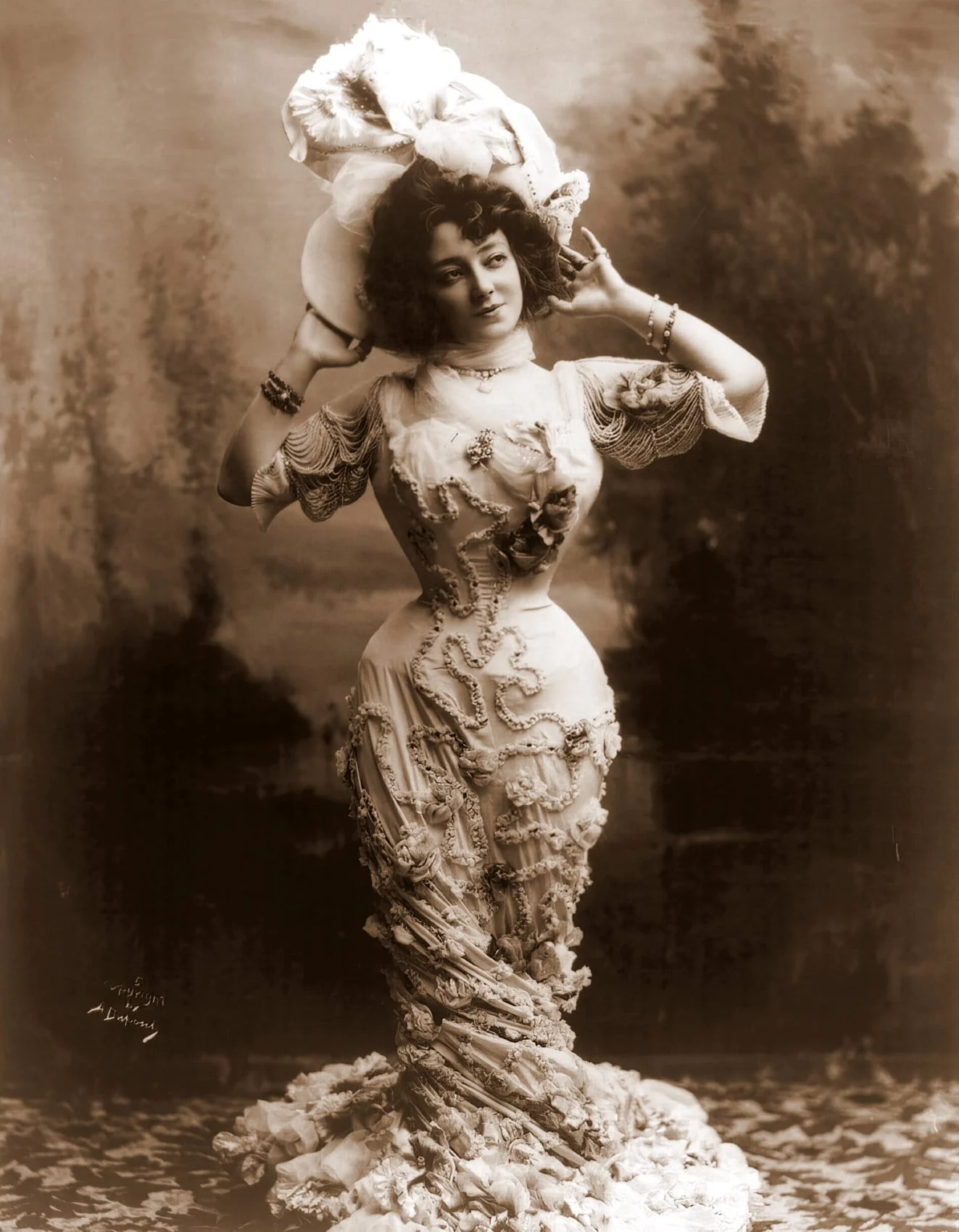
Pain in the name of beauty is not new. It is only newly male.
Corsets appeared in Europe around 1500 and soon became mandatory for middle- and upper-class women. Almost as soon, physicians blamed them for ailments from fainting spells to muscle atrophy, and feminists attacked them as a restraint both physical and symbolic. The warnings lasted for centuries. So did the corset.
What finally loosened it was not medical consensus. In 1917, with steel needed for the war, the U.S. War Industries Board asked American women to stop buying corsets, freeing an estimated 28,000 tons of metal. Women taking factory jobs needed to move, and the modern bra arrived around the same time. By the war's end in 1918, the corset was fading fast.
The lesson is uncomfortable. Knowing a beauty practice is harmful rarely ends it. The corset ended when the lives around it changed.
Why it resonates
The same holds for looksmaxxing. The dangers of bone smashing, hormones, unregulated drugs and starvation are easy to find. That is not what the movement emphasizes, and it is not why it resonates.
Many young men are living through a crisis of insecurity and a missing sense of belonging. Looksmaxxing offers exactly what that void asks for: a structured identity, a community of peers, and a concrete list of actions to take against a vague and painful feeling. The danger is not news to these men. It is the price of admission, and many are willing to pay it.
The timing helped. A generation spent formative teenage years isolated during the pandemic and living online, as Peters did. Platforms, meanwhile, send mixed signals. YouTube has terminated his channels, while Kick has made him one of its best-paid streamers. As long as pain is monetized, it will keep being produced.
The fashion question
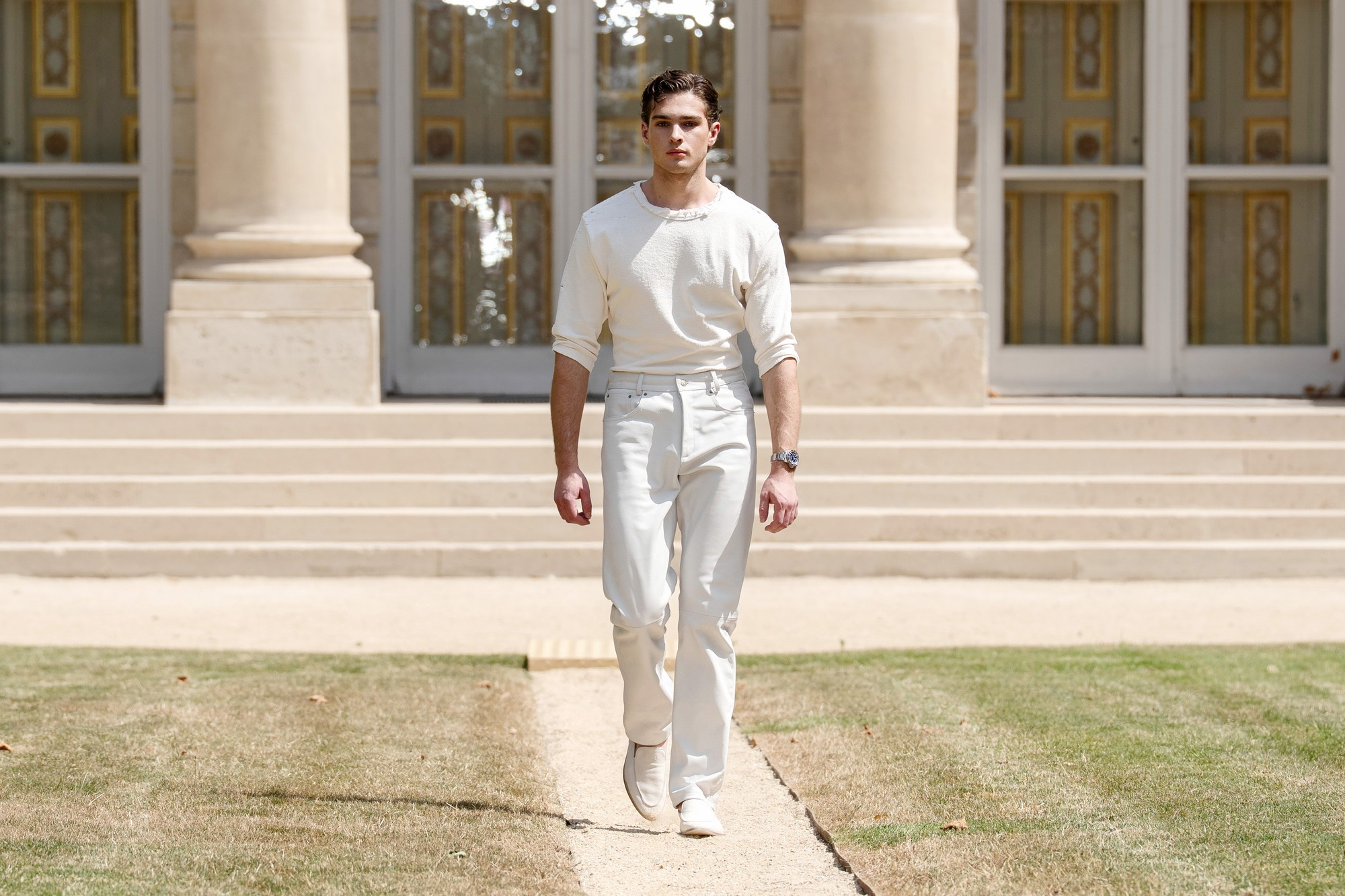
So does looksmaxxing mark the return of painful fashion as something aspirational? If young men will reshape their bodies in the name of beauty, will they extend that willingness to what they wear? These are exactly the cultural currents that shape fashion.
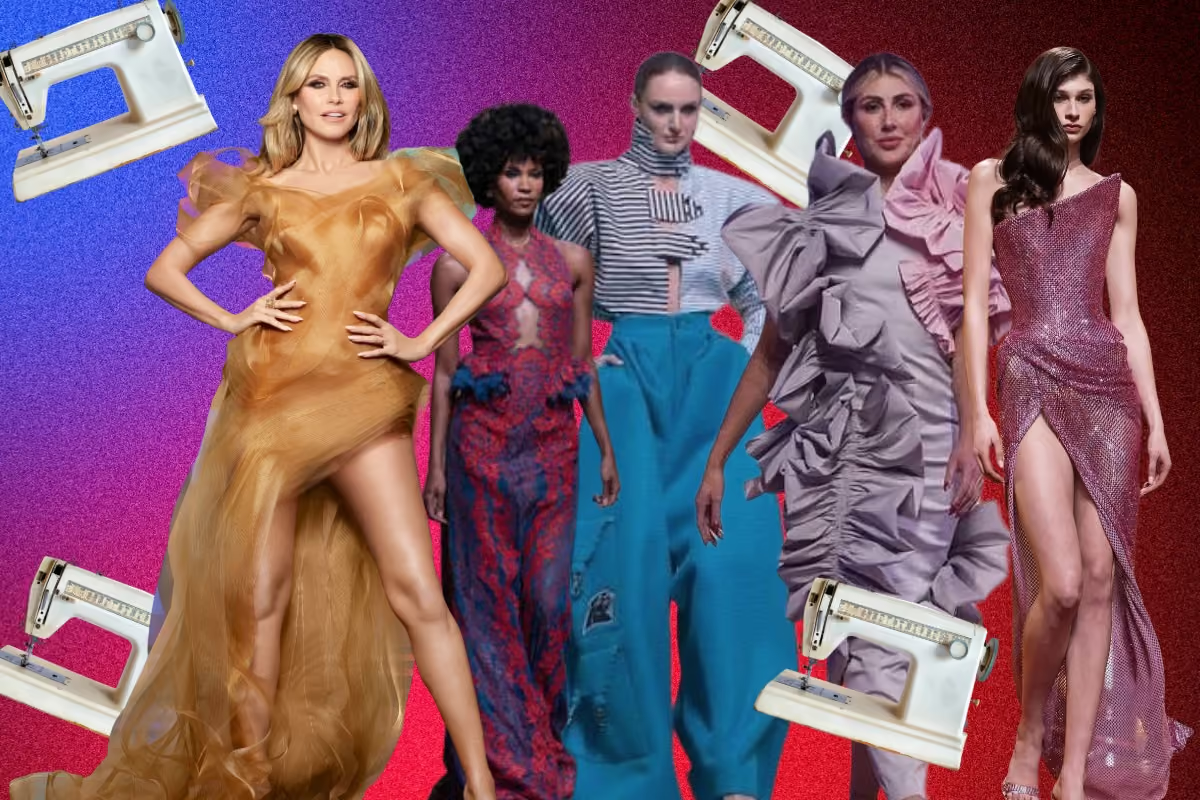
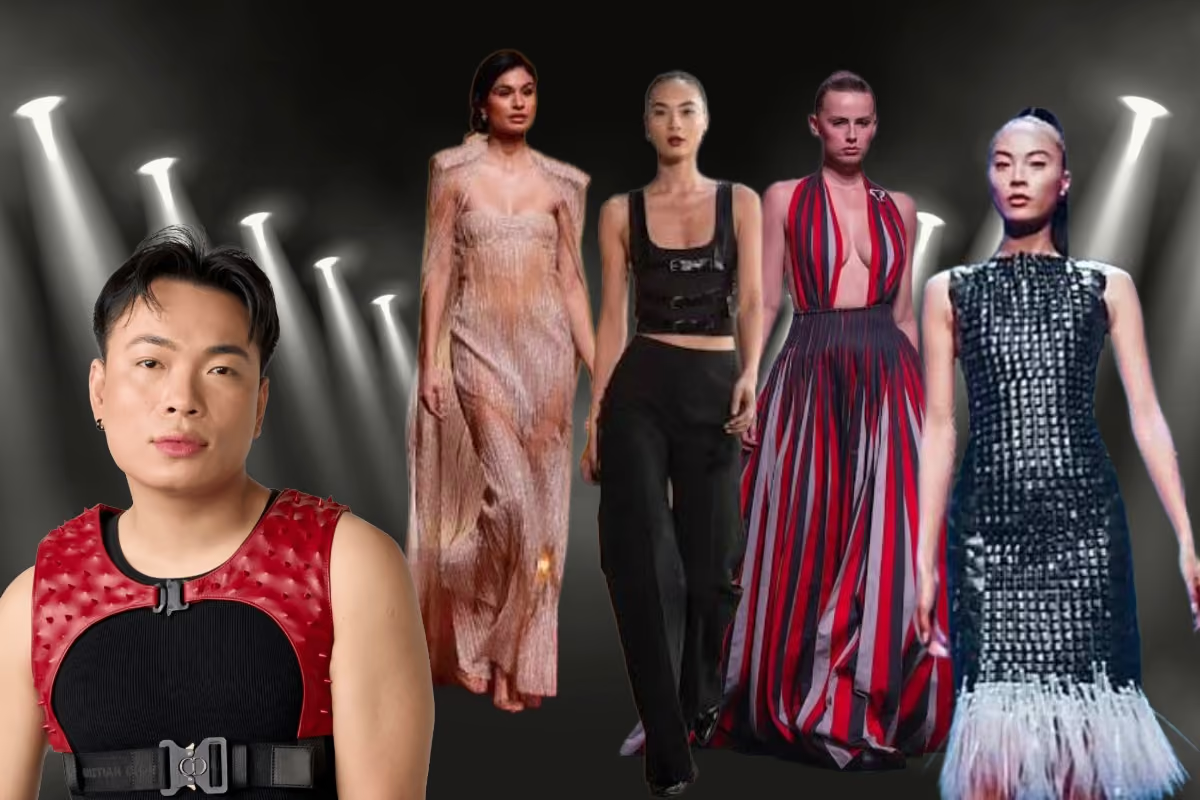
The industry has already opened the conversation. In February 2026, designer Elena Velez built her New York Fashion Week show around looksmaxxing and featured Peters on the runway. Days later, Peters walked at the 424 fashion show in Paris. When fashion's most provocative corners stage a subculture, the mainstream tends to follow, softened and ready to sell.
The cost of belonging
Looksmaxxing is often treated as a story about vanity. It is better understood as a story about belonging. Peters's career shows how the pieces fit: an isolated teenager found a community that ranked him, handed him a regimen, and eventually paid him to perform that regimen for others. Every risk he takes on camera becomes proof of commitment for the young men watching.
The corset shows how practices like this end. Not with warnings, which women heard for centuries, but when the world around them changes. That is the real challenge looksmaxxing poses. Telling young men that hammers and hormones are dangerous will not be enough, because they already know. What matters is whether they can find identity and belonging somewhere that does not demand their health as payment, and whether platforms keep paying for pain.
Fashion sits at the center of that question. It can turn looksmaxxing's cruelty into an aesthetic, the way it once made the corset a status symbol. Or it can offer young men what the movement never will: a way to look good that does not require them to break first.
.avif)