
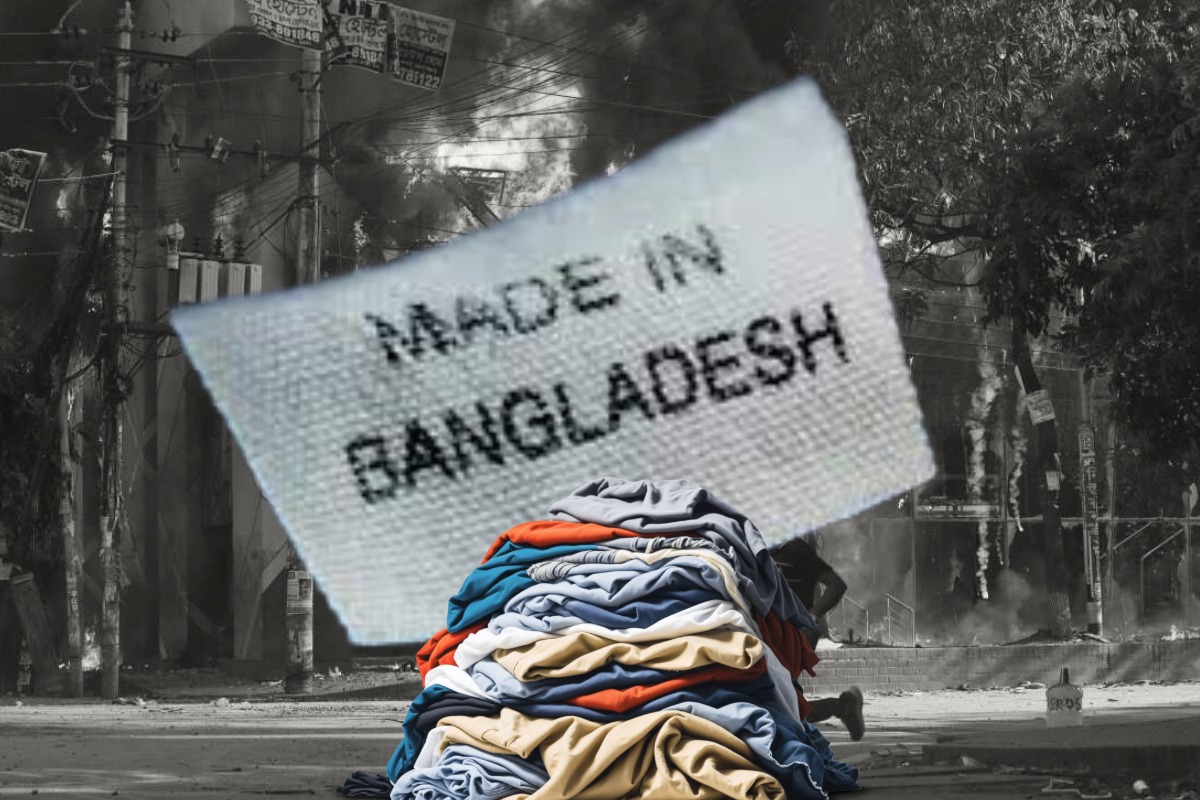
The U.S. buys more than $8 billion worth of clothing from Bangladesh every year. That's the clothes on the racks at the mall, in your online cart, and the ones you'll give or get this holiday season.
Right now, the people who make those clothes are on strike demanding fair wages.
Two weeks of walkouts
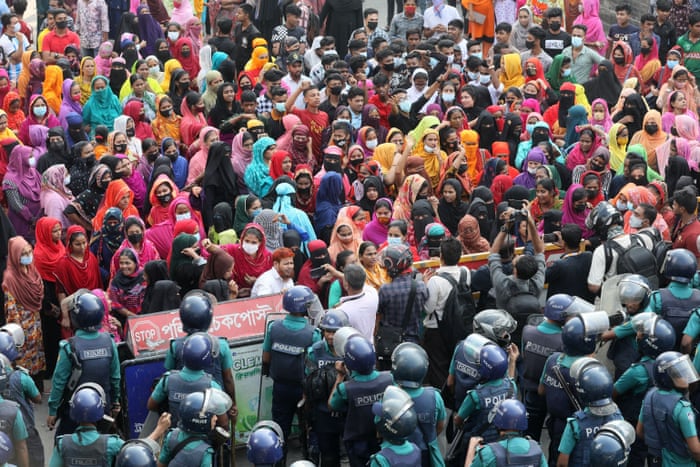
For more than two weeks, garment workers in Bangladesh have been blocking roads and walking off the job. Police have answered with tear gas. According to the factory owners' association, almost a million workers left their workplaces on November 1, the first day alone. Last weekend, nearly 150 factories were shut in Savar, Ashulia and Gazipur, the heart of the country's clothing industry.
The rule is simple: no work, no pay. Every worker in the streets is giving up a paycheck to be there.
How much do Bangladesh garment workers make?
The minimum wage for a Bangladeshi garment worker is 12,500 taka a month, about $101. Workers are demanding 30,000 taka, about $242.
The last raise came in December 2023. Since then, the cost of food, rent and transportation has kept climbing. Garment workers in Cambodia and Vietnam, two of Bangladesh's biggest competitors, already earn more.
Monthly minimum wage
Bangladesh today ~$101
Bangladesh workers' demand ~$242
Vietnam $140–210
Cambodian $210
Some say that there is a likelihood for things to change.
In February, Tarique Rahman was sworn in as prime minister after his party, the BNP, won the first election since the 2024 student-led uprising. He came in promising to stabilize the economy and bring inflation under control.
This strike is one of the biggest tests of that promise so far. The government has responded with a new wage board, an emergency cabinet meeting and a raise agreed to in principle. The catch is that nobody has said how much it will be.
Union leaders are urging workers to show "patience, restraint, and responsibility" while talks continue. Some workers have gone back to work while others are back in the streets protesting.
The Bangladesh Garment Manufacturers and Exporters Association and Bangladesh Knitwear Manufacturers and Association, the country’s key trade bodies for manufacturers, have called for negotiations to resume as quickly as possible.
The board kept the figure that had been offered confidential, although Chairman Judge Syed Azad Subhani said the proposed monthly minimum wage was above 14,500 taka ($116).
On top of these challenges, factory owners are under financial pressure of their own. They're absorbing additional U.S. tariffs on top of the ones they already paid.
Then the Iran war closed the Strait of Hormuz and cut off much of the gas these factories run on. By the summer, many factories in the main industrial belts were running up to 40% below capacity. The industry already operates on profit margins under 4%, which leaves almost no room to absorb new costs.
Everyone in this supply chain is feeling the squeeze. But the workers are the ones skipping meals and struggling to make ends meet.
The questions on the tag
What happens in Bangladesh doesn't stay in Bangladesh. What clothes are being made? Who is making them? And at what cost? Those are questions for every one of us who buys clothes, wherever we live.
As of November 24th, it is estimated that the disruptions of 317 factories cost about $428 million in lost production, according to the Bangladesh Garment Manufacturers and Exporters Association.