
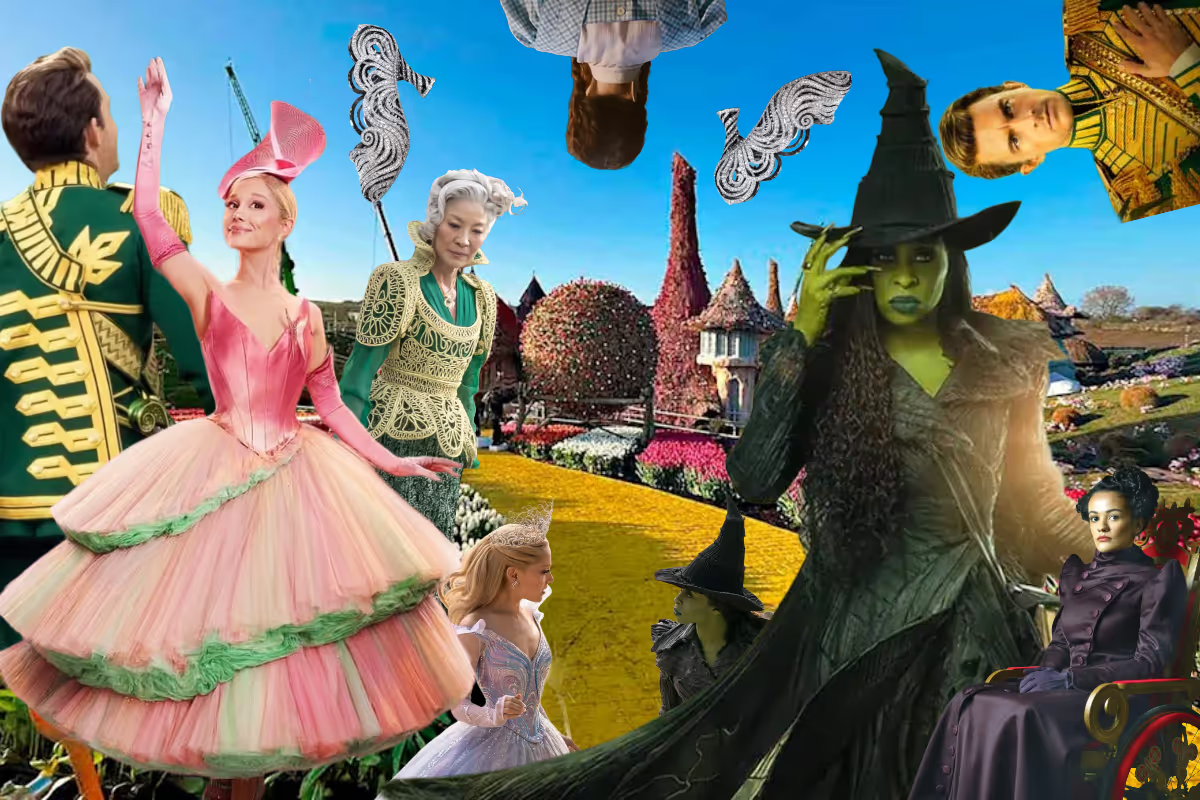
How does wickedness happen? Are people born Wicked or do they become Wicked? In the second part of the highly successful adaptation of the musical, we see the stories of the Wicked Witch of the East, Wicked Witch of the West and Glinda, the Good Witch, evolving five years after leaving Giz.
Let’s take a closer look at the evolution of our beloved characters and go over the incredible Wicked fashion that Oscar-winning Costume Designer Paul Tazewell created across thousands of costumes for the second part of this film.
Setting the scene
The costumes of the film are not an afterthought. There is an entire team of tailors, seamstresses, illustrators, crew, and samplemakers making it all happen. We associate the words “Good Witch” and “Bad Witch” with certain colors, shapes and textures. In many ways, clothes play a crucial role in ensuring that the storytelling is consistent with the story that is about to be told, and that we see the characters in a Wicked fashion. In a magical and fictional world as the Land of Oz, one can play with references from different time periods, blending them together to create something new. Set designer Nathan Crowley spoke about how he merged architectural elements from different parts of the world and centuries to design the set of Giz. This way, it would reference something that people had already seen, but with a twist, as it is interpreted and used with different materials and used with different techniques and methods.
There is a lot of research that comes before even the brainstorming stage of designing for these beloved characters comes in. Make sure to check out The Magical and Political Fashion of Wicked is Defying Gravity, where we analyze the costumes of Wicked Fashion Part One.
Elphaba’s costumes are primarily black, so it is difficult to capture the light. Still, it was a priority to keep the costumes of both main characters as captivating as possible. This is why Elphaba’s costumes are so rich in texture and there is a play with textile manipulations and extraordinary pleatings and treatments. As Elphaba’s character is so close to earth and the animals, Costume Designer Tazewell referenced mushrooms as a main source of inspiration for the texture and textile manipulation we see in Elphaba’s costumes.
On the other hand, Glinda is full of artificial and synthetic bubbles and butterflies. It is about the movement and what is possible within these movements. Glinda’s skirts are a result of layering and feature embroideries that reflect the light in beautiful ways that bring together her full character.
Wicked for Good.
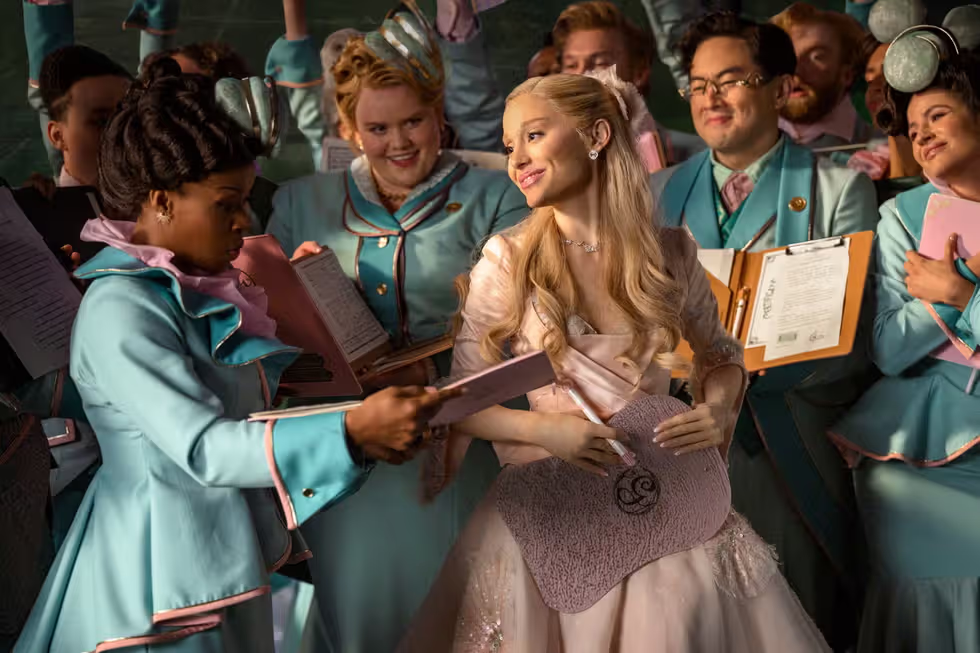
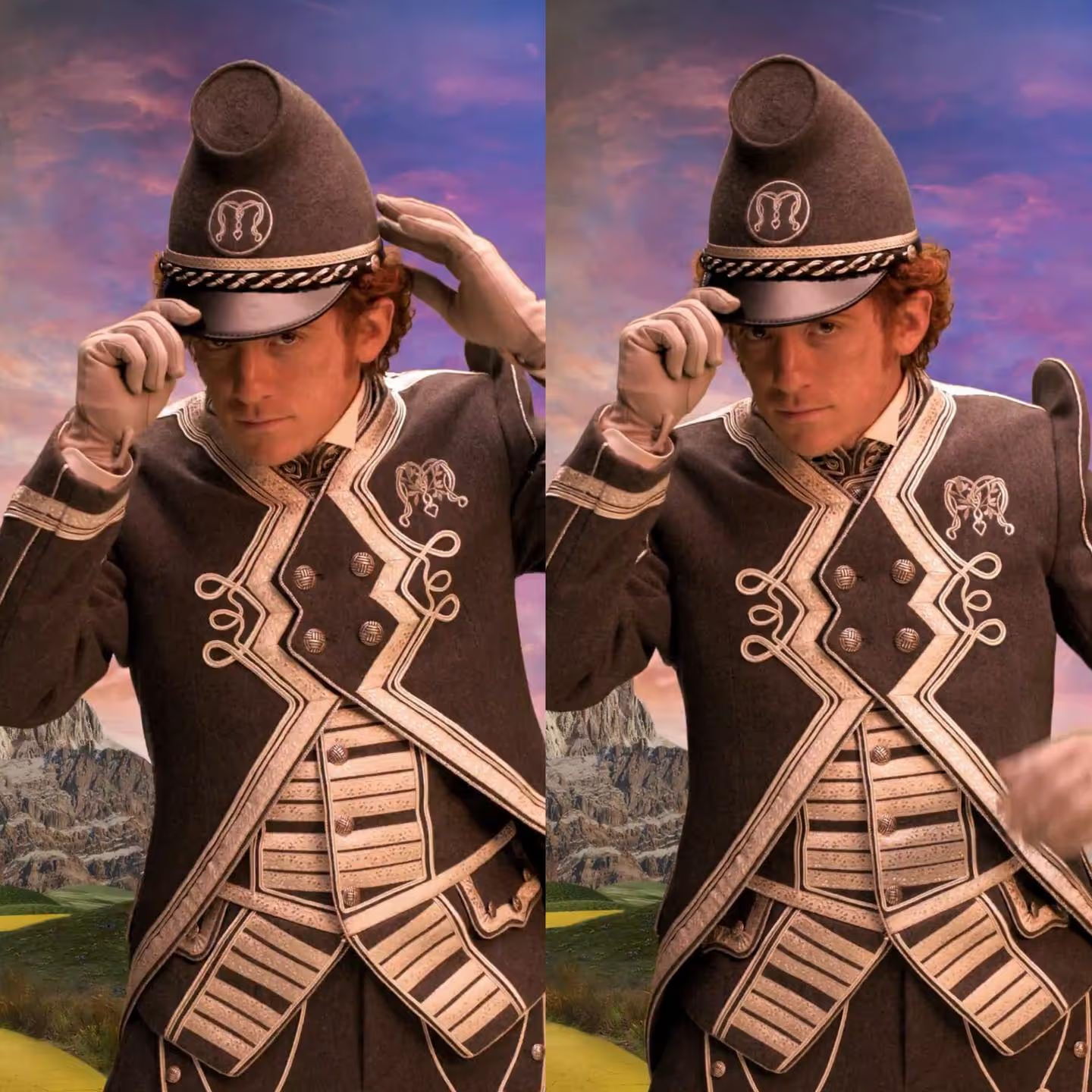
The first dress that Glinda wears in the second film is a more sophisticated version of her soft and ultrafeminine fashion choices as a student. There is a clear reference to Marie Antoinette, the last Queen of France, who arguably served as a political pawn to unify Austria and France at a time when goodness was aligned with politeness and dressed in soft colors and ostentatious fabrics and silhouettes.
Madame Morrible
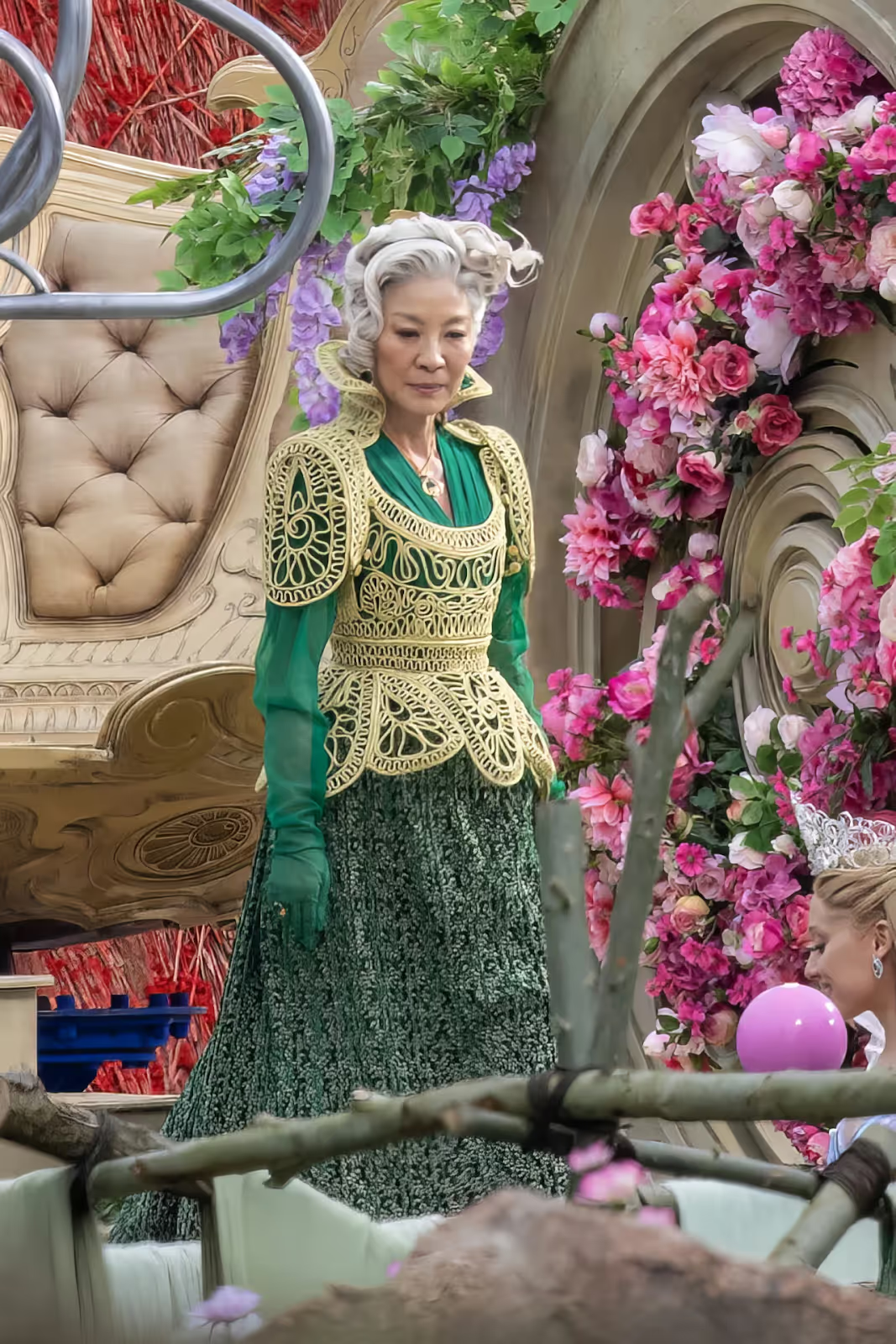
Uniforms help to illustrate loyalty and a sense of belonging. Uniforms are quite often used in sports teams. When a country is celebrating patriotic holidays, the colors of the flag are often associated with them. The Fourth of July is full of red, white, and blue. Mexico’s Independence Day is red, white and green.
In the Land of Oz, emerald green and gold are staple colors for those working very closely with the Wizard of Oz. We see Madame Morrible, the press secretary who works on spreading disinformation through propaganda using green and gold merged with her futuristic and androgynous silhouettes.
Nessa
In the safe democracy of Munchkinland, the Governor dies of shame and his daughter, who was a college student, takes over as Governor. Nessa is mourning the death of her father and is full of anger towards her sister, who she believes has abandoned her and left her behind. Nessa’s character evolution is shown in her hair, in her makeup and in her clothes. She is wearing black as she is grieving her father, but perhaps also as a hint that she is about to become the Wicked Witch of the East. Her tailored and elevated sleeves strengthen the personality of her character, one who takes executive decisions such as banning munchkins from leaving Munchkinland. This is a strong contrast with the soft and vulnerable young student whom we see in part one of Wicked.
Additionally, it is worth pointing out how disability is recognized in Wicked for Good as a social construct. Nessa’s character goes far beyond her mobility impairments. Her wheelchair is painted red as a throne and perhaps as a nod to the ruby slippers of the Wizard of Oz.
Fiyero
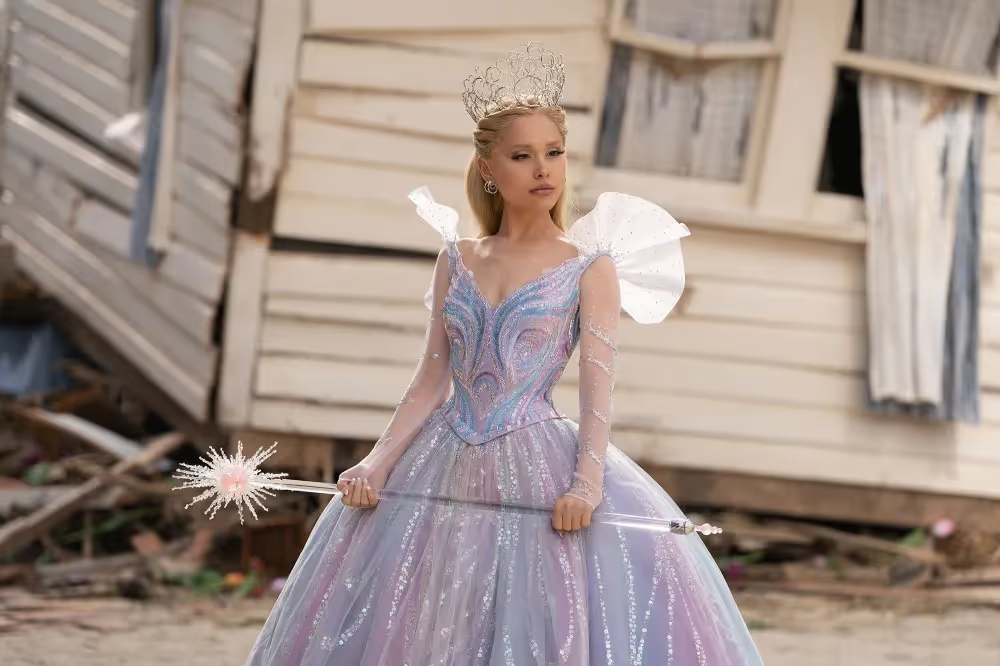
Fiyero appears to be another member of the “establishment” who is set to marry Glinda and charm Ozians with their charisma amidst the fearful propaganda Madame Morrible has been feeding to them for years. It is fascinating to see how the costumes of these characters help to set the scene for the evolutions and changes the characters are experiencing. Fiyero’s uniform in Oz resembles the embroidery he wore in the first film of the movie. There is something about his character that resists the change and resists being complicit with the actions that the Wizard and Madame Morrible are taking.
Similarly, both Fiyero and Boq suffer some of the most consequential transitions to their characters and their costumes help set the scene and illustrate what is set to happen to them. Fiyero’s embellishments in his uniform illustrate some crops. Additionally, the placement of the embroideries gives a hint of the silhouette that his character will have with his new identity.
On the other hand, Boq wears silver embroideries and a hat with a peculiar silhouette that will become a staple accessory of his new identity as the tin man.
Glinda’s gown
The process of designing the costumes for Wicked involves facing the challenges of ensuring that the beloved characters portrayed in the classic film The Wizard of Oz are respected, but still create something that is new, relevant and alternative to celebrate the special nature of the story of Wicked.
This multi-layered gown was hand-embroidered once the bustier was already constructed, rather than embroidering it with all the pieces flat. This decision was made to ensure that the embroidery looked seamless and was placed in the exact spots as it was envisioned by the team.
The colors of the skirt are achieved by having different layers of organza. There is blue, white, purple and pink that blend together to create the outstanding result we see in the film. One can get a glance at the several layers during the girls’ fight scene!
Elphaba
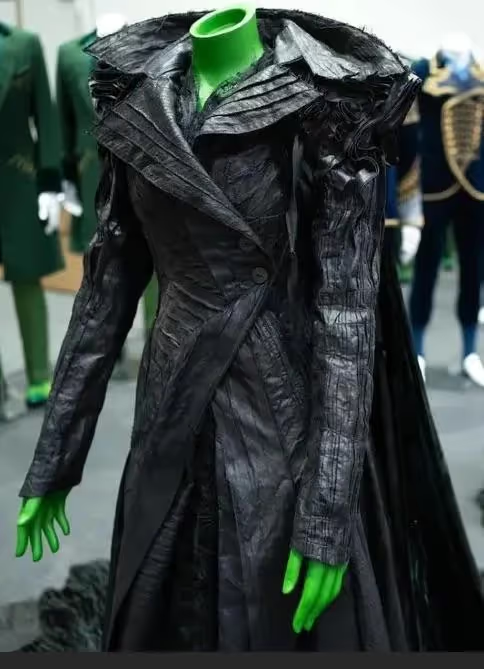
Wicked Part One ends with Elphaba wearing her “best dress” to see the Wizard —a figure that she had admired her whole life and that she had hoped would help “degreenify” her and let the animals be free.
But Elphaba escapes with a long coat, singing Defying Gravity and escaping far into the woods.
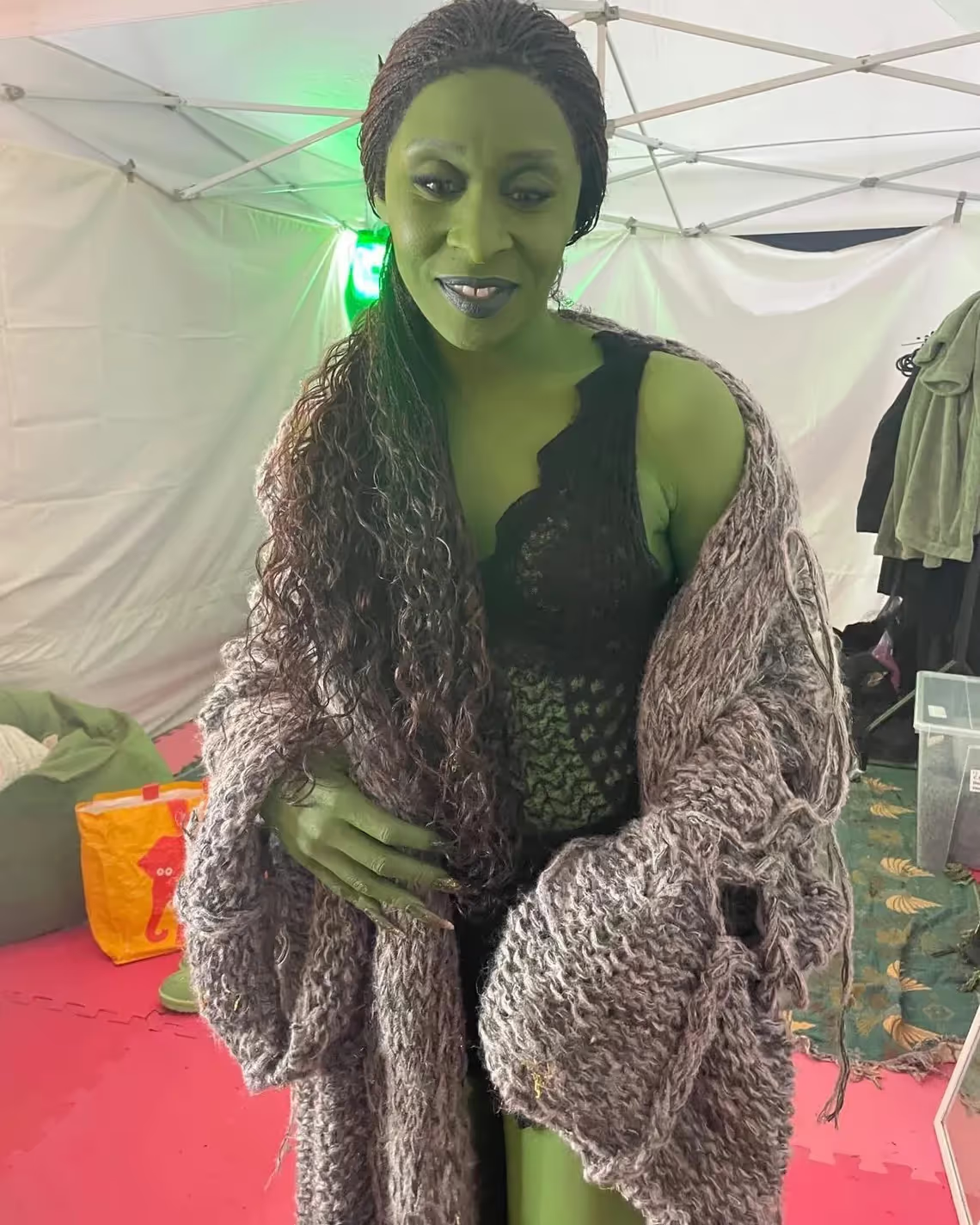
Wicked For Good resumes the life of Elphaba living in exile in the forest and upcycling some of the fabric from this last look. There are elements of wear and tear, and according to the book, it is suggested that she is making her own fabrics, so Costume Designer Tazewell took this prompt to play with the idea of a knitted cardigan. (The grey cardigan Elphaba wears when performing As Long as You’re Mine). It continues to have both the organic feel of Elphaba being close to nature, earth and animals and her style that is rich in texture. It is also important to point out the evolution of clothes between Part One and Wicked for Good for Elphaba. Her uniforms are tailored and full of straight lines that feel restricted, exemplifying the desire that the character had to restrain her special powers. In Wicked for good, her fashion is much more relaxed and flowy, with angular lines and silhouettes that reflect how she is no longer restraining her special powers and is in fact learning to embrace them.
Dorothy
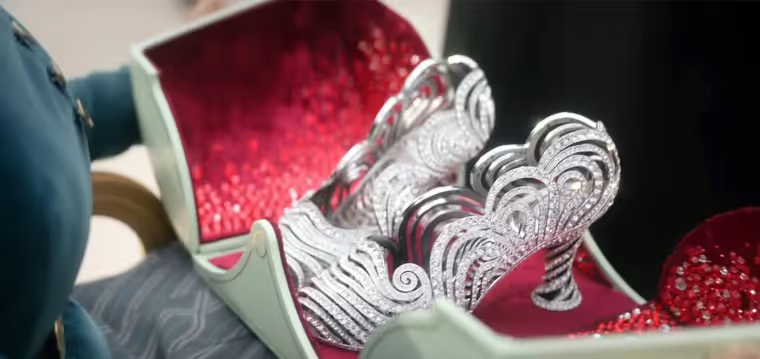
In The Wizard of Oz, Dorothy was the main character. In Wicked, Dorothy is a faceless villain who rubber stamps the tragic fate of Elphaba and Glinda’s friendship. Still, Dorothy is one of the most well-known characters in film history, and as such, the print and overall design of her dress remain quite similar to the pop culture references most people associate with this character. The twist, however, is the color of the ruby shoes. In the Wizard of Oz book published in 1900, the shoes are meant to be silver rather than ruby. However, in the 1939 movie, the technology of that time wanted to celebrate the idea of creating color shoes and transition from a decolored scene in Kansas to a fully colored Land of Oz with ruby slippers that were bright. In Wicked, the slippers go back to the origins of the book by making them silver. The jeweled lines exemplify tornadoes as another glimpse of the fate that the character was about to face.
The last scene
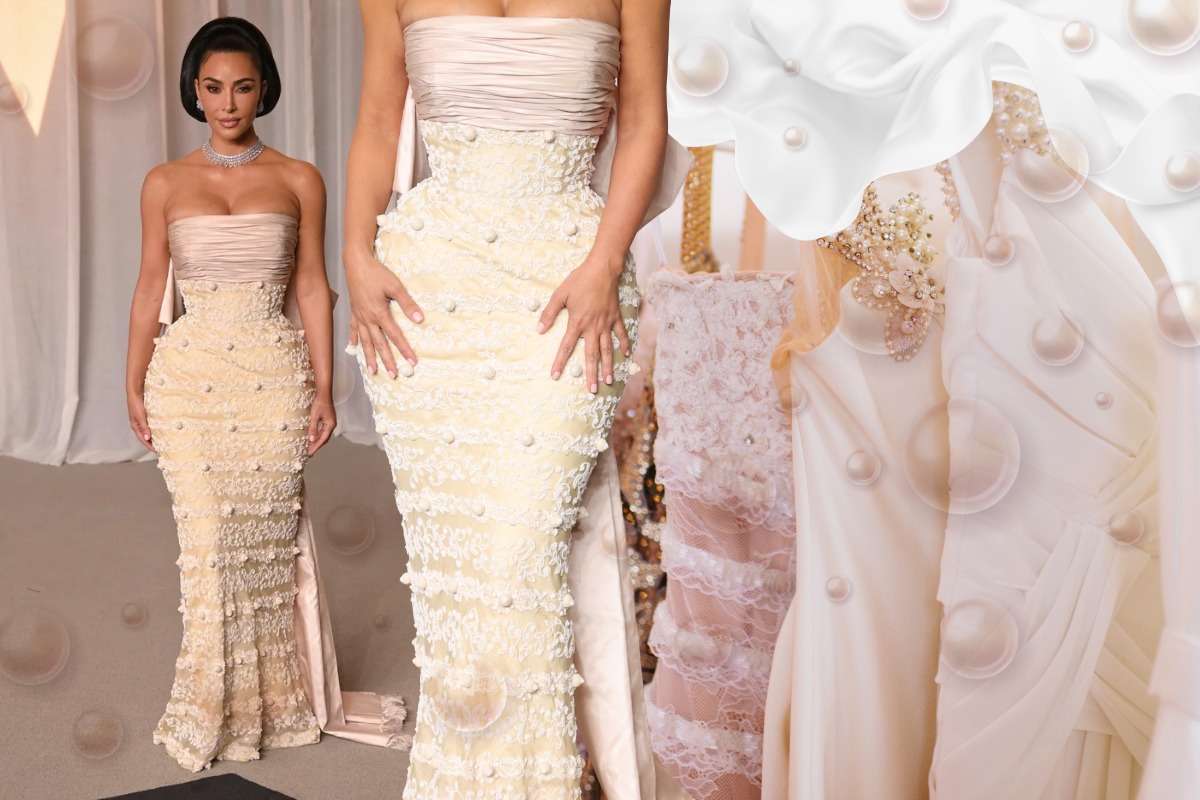
The film closes with the No One Mourns the Wicked opening scene of the first film, a gown that elevates Glinda as the designated leader of Oz. She went from being a popular girl at school, to a Good Witch who served as Ambassador of Goodness, to a leader who would speak with calm amidst chaos across an entire Land with living beings that have entrusted her. It is a full-circle moment where the gown helps us see how much Glinda has outgrown the last versions of herself and who this new Good Witch is.
Elphaba leaves her hat behind. She is no longer the Wicked Witch of the West, she is dead. Elphaba and Fiyero are now set to go to a land away from Oz, where no one can find them and where they can live their lives together peacefully. For this last scene, as Elphaba is ready to start her new life and saying goodbye to Glinda, and the land that she once called home, she is wearing a black chiffon dress with a hood. It is semi-transparent and it moves with the wind dramatically as if who she once were was vanishing into the desert looking at the same rainbow Glinda was looking at from Emerald City.
.avif)