There is something quietly electric about the moment a national football team steps onto the pitch wearing green. It's not olive, nor army. It's emerald green — the deep, saturated hue that has defined Mexico's team across generations. Amongst design iterations, replicas, and original designs, the common thread is the color that Mexican fans in Los Angeles, Chicago, and Mexico City alike recognize before they read a single word on the jersey. For the 2026 World Cup, that color is back. This time it's carrying more weight than it has in forty years. The reasons have to do not just with the design, but also with the social context.
Mexico is co-hosting the FIFA World Cup 2026, and it is playing a home World Cup for the first time since 1986. That alone would make this jersey significant — it is the jersey that many young generations of Mexican fans are seeing on TV, watching their team play as a host in a World Cup for the first time in their lives. In this sense, the 2026 kit is a uniform, but it's also a statement, a commercial object, a cultural artifact, and a snapshot of history. Stitched into the fabric are the words Somos México — "We are Mexico." It's a declaration of identity dressed up as sportswear, and it arrives at a moment when the question of what Mexico means, and to whom, feels more charged than ever.
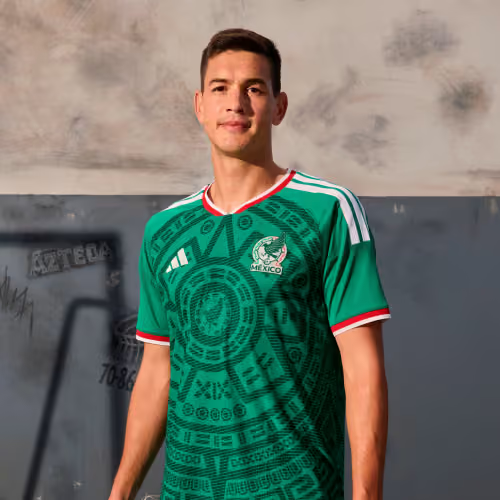
After years of experimenting with darker and alternative tones, El Tri and adidas have returned to one of the country's most recognizable colors, framing the kit as a celebration of Mexican identity and football culture. The pivot back to classic green is not just aesthetic nostalgia — it reinforces the nationalistic trends that we have seen across different countries over the last few decades: nations pushing forward colors and symbols that trace back to their roots and their origins.
Over 8.5 million people play soccer across Mexico. From school tournaments to weekend recreational leagues in neighborhoods, soccer is woven into the culture of community engagement. As Mexico celebrates its historic third time hosting the World Cup — the last being in 1986 — the conversation about the visual narrative of soccer in Mexico cannot happen without speaking about jerseys.
To understand the 2026 jersey, you have to understand what it's in conversation with. The last time Mexico hosted a World Cup, in 1986, El Tri advanced to the quarter-finals before falling to West Germany in a penalty shootout, wearing a clean, minimalist green kit with the classic V-neck collar and three white stripes down the shoulders. For many Mexican fans, that jersey evokes something almost primal: watching the tournament as children, the collective excitement of a nation united by football, the particular feeling of your country being the center of the world for a few weeks. The 1986 kit is a national memory. In that regard, soccer has been able to unite Mexican fans during World Cup and international tournaments. Social and political divisions become secondary as the stakes of the game take center stage. Jerseys are a visual embodiment of how this unity operates — there is no distinction amongst fans, and a camaraderie of support emerges when the time comes to back the team.
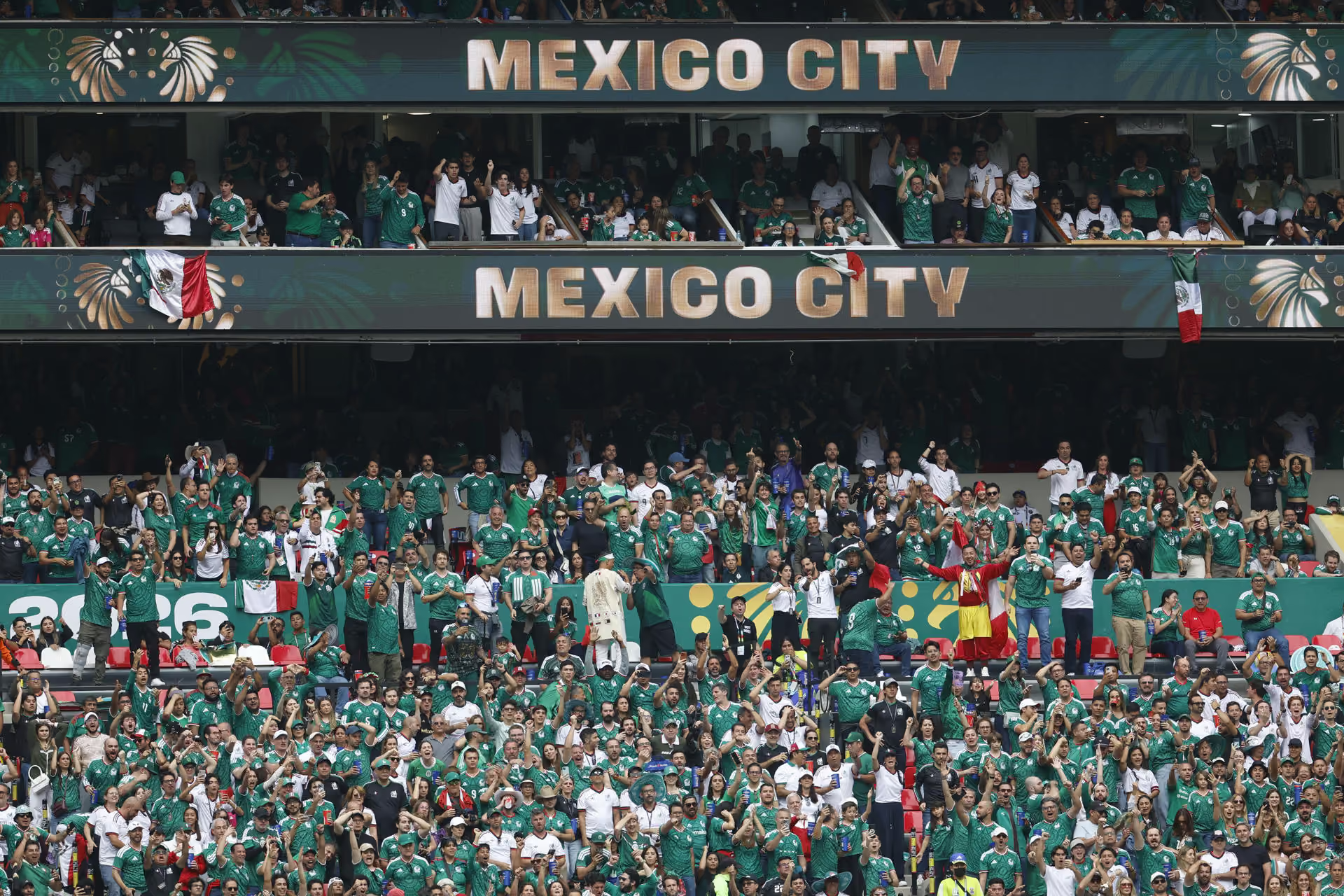
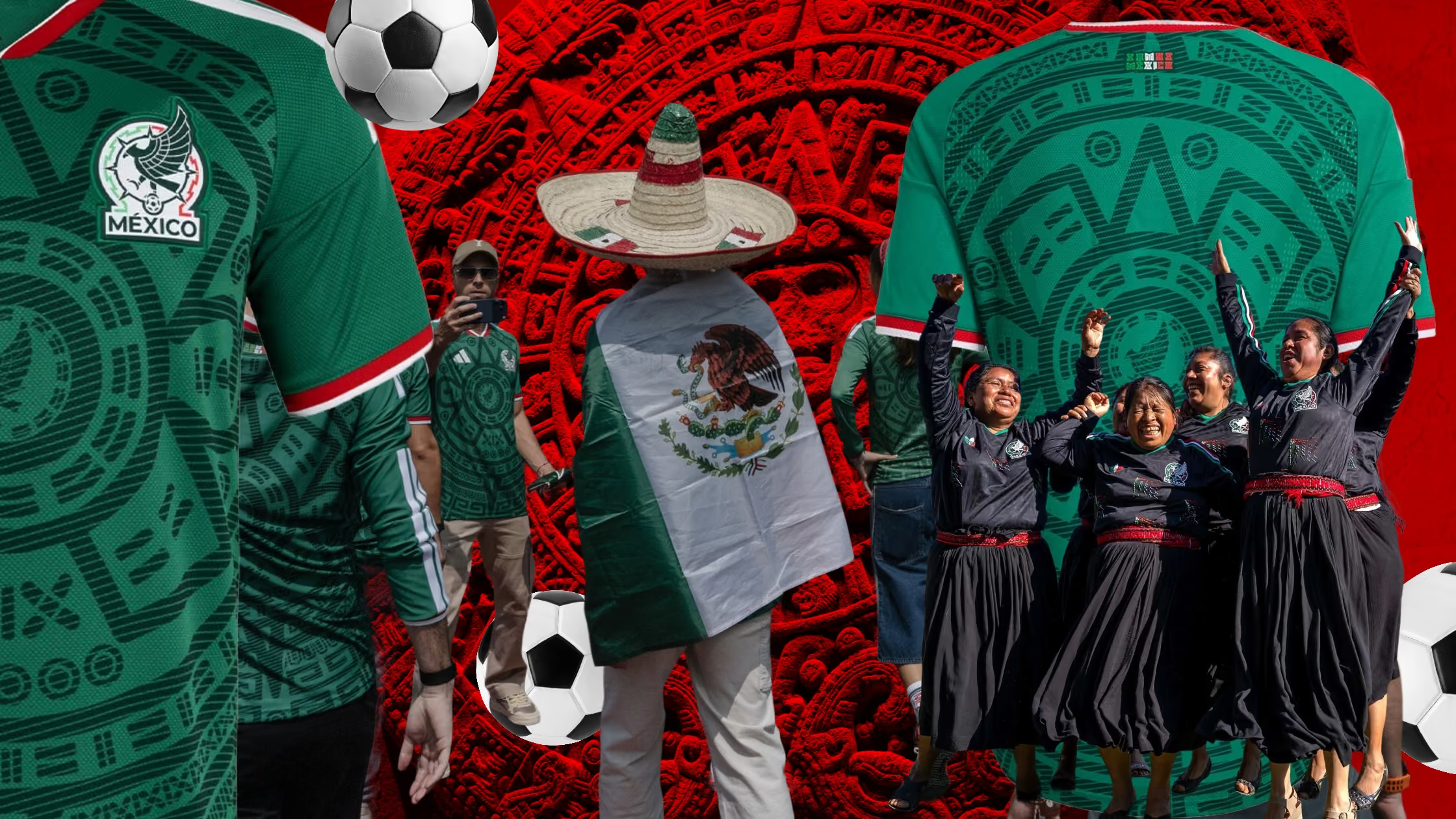
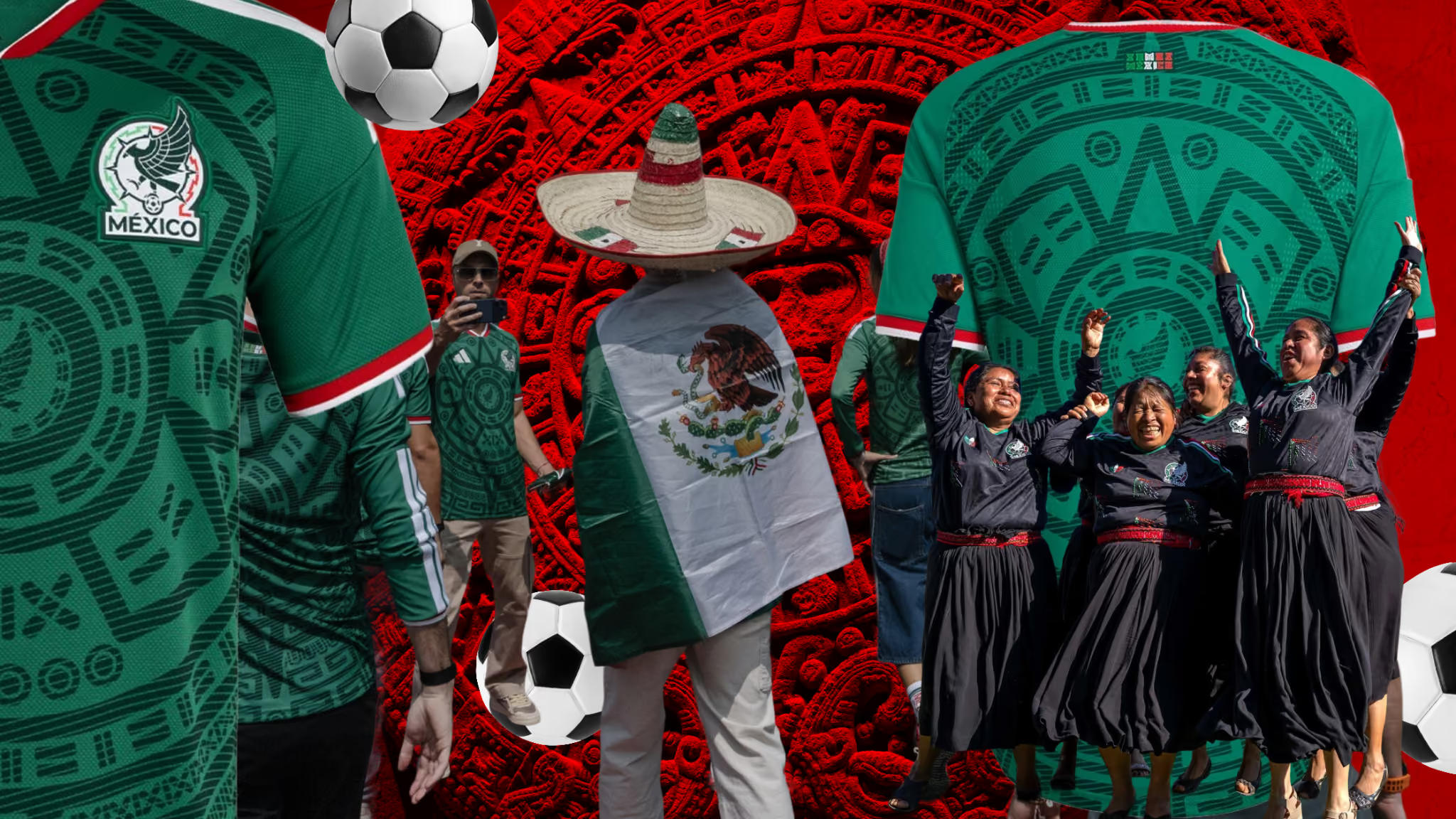
The 2026 version knows exactly what it's doing with these memories: the psychology of bringing people together and evoking historical roots at a historic moment for Mexico as a World Cup host. Built around the "Mexican Wa(y)ve" concept, the new kit features a central pattern inspired by the Piedra del Sol, nodding directly to the design worn during the 1998 World Cup in France, alongside a retro adidas Originals trefoil logo and an embossed holographic crest. The Piedra del Sol is the centerpiece of the design — immediately recognizable and purposeful. The Sun Stone is a representation of the Aztec concept of time, its cyclical nature, and the relationship between the gods and humans. It is perhaps the single most recognizable symbol of pre-colonial Mexican civilization. Beyond its archaeological significance, the sun stone image has been adopted by modern Mexican and Mexican American/Chicano culture figures, and is used in folk art and as a symbol of cultural identity. Placing it at the center of a World Cup jersey is a bold visual choice — one that is as energetic as the passion of Mexican fans supporting their team.
The depth and richness of Mexico's jersey comes in layers: the nostalgic patriotic symbolism, the textural depth of the tonal MX pattern, the retro trefoil that blends seamlessly into the whole. Fans on social media have been divided — many praised the design's cultural tribute, while others expected something bolder for a host nation's kit. The criticism is understandable. This is Mexico's third time hosting the World Cup, an unprecedented achievement, and some expected the design to announce itself more loudly, to feel like a once-in-a-generation statement. Instead, it chose reference over rupture.
But maybe that's the point. Mexico's jersey strategy signals how host nations can use cultural identity as a competitive advantage. The emphasis on heritage and the Somos México messaging creates a unifying narrative that extends beyond the team to the entire tournament. In a World Cup co-hosted with the United States and Canada, Mexico's most powerful move isn't to out-design its neighbors. It's to out-mean them. To say: we were here before this tournament, and we'll be here after it. The green jersey, the Piedra del Sol, the Somos México — it's all pointing backward in order to claim the present.
The Styling of the Jersey
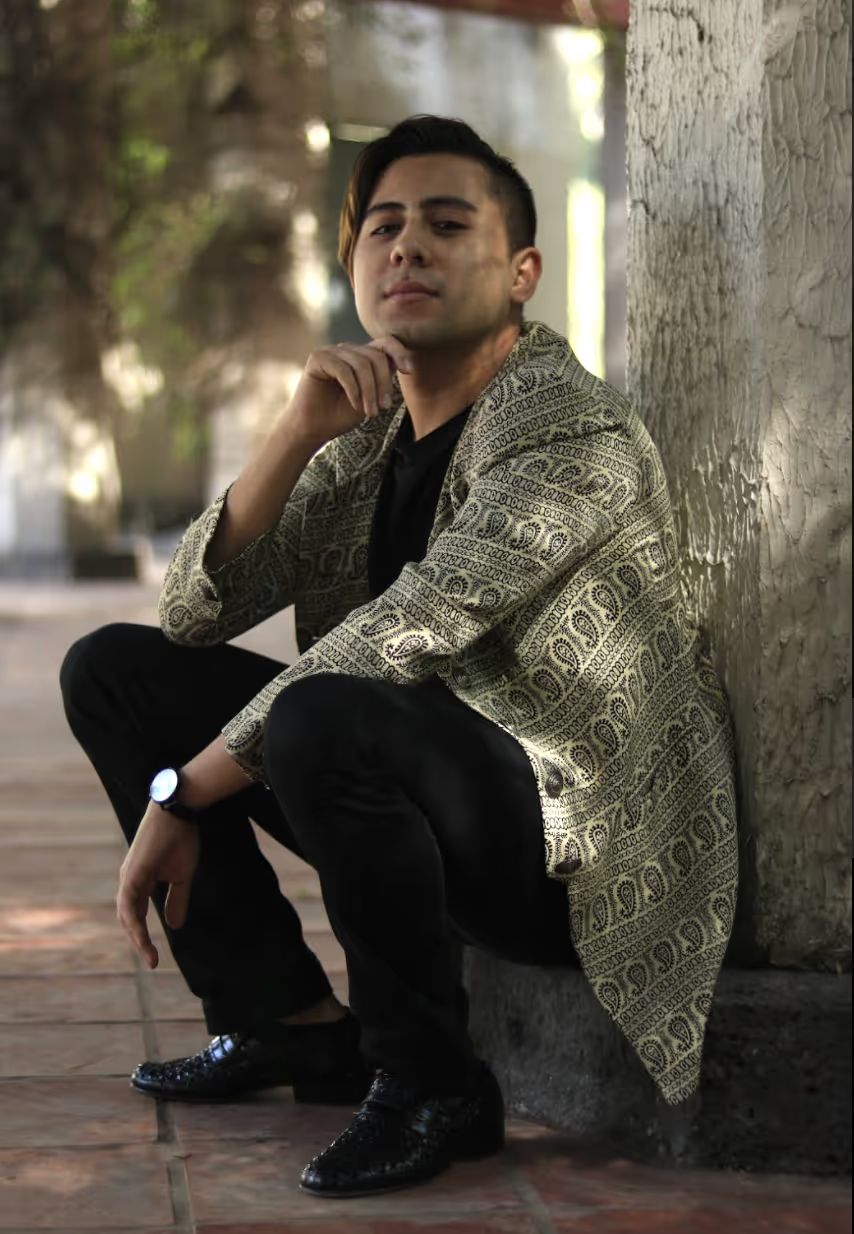
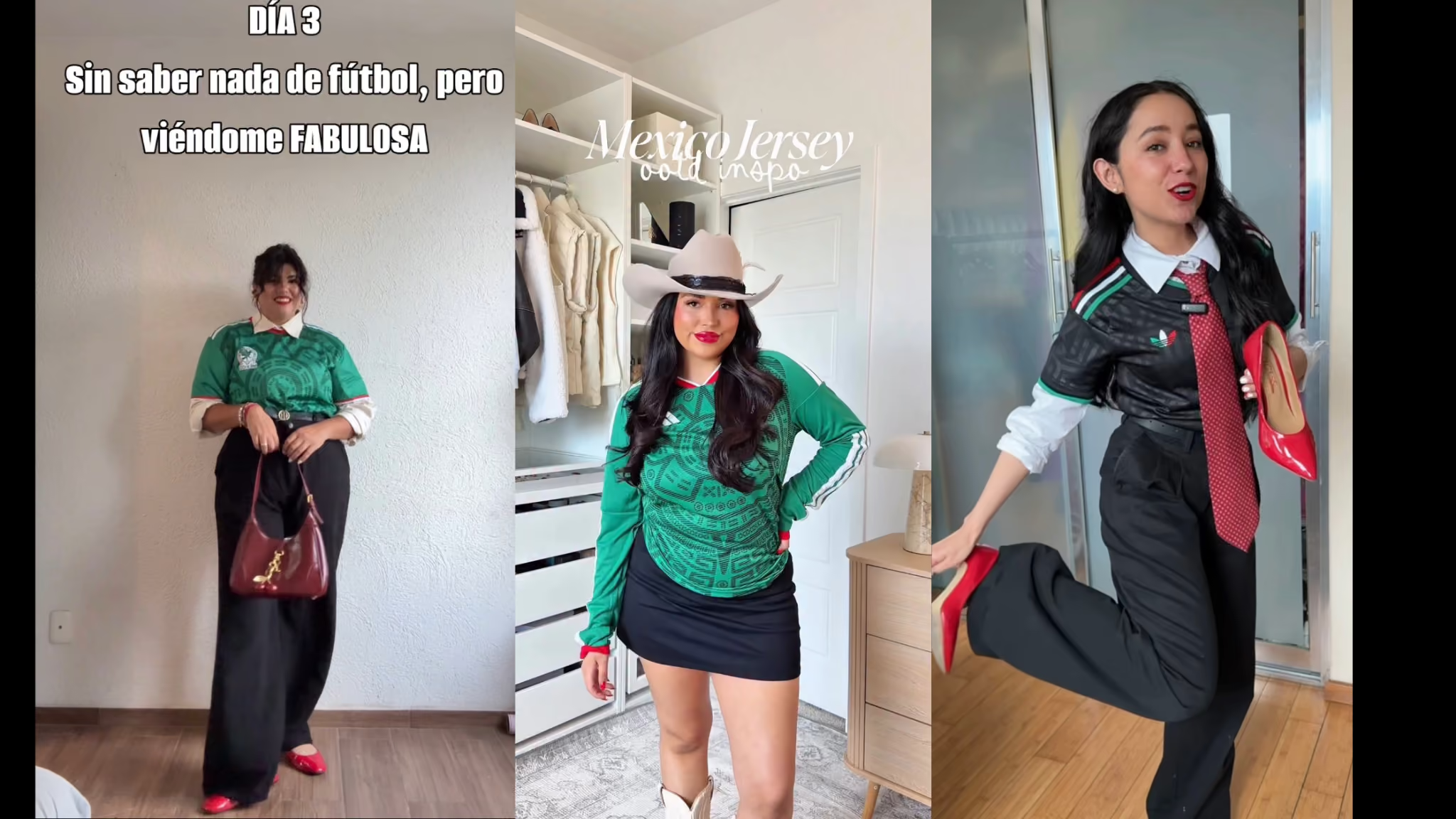
The price of soccer jerseys can easily exceed the $150 mark. There is a real investment attached to this piece, and while hardcore fans are most likely to purchase the newest version come the next World Cup, an interesting conversation is happening online about how to bring Mexico's jersey into day-to-day fashion. This involves not just different ways of styling the jersey to watch the game, but thinking about dressing it up or down — pairing it with a button-down and a blazer, a maxi skirt and sneakers, or wearing a completely customized, bedazzled, or personalized version. In a way, this gives people the opportunity to express what they want to see in a jersey for future tournaments, while also giving previous jerseys a second life.
In an effort to boost the visibility of traditional craftsmanship and artisans in Mexico, adidas partnered with Someone Somewhere, a digital-native brand that connects hundreds of rural artists from Latin America to craft clothes and accessories. For the 2026 World Cup, the two entities partnered with 150 indigenous women from Naupan, Mexico. The collection was branded as a third drop of Mexico's kits — the first being the emerald green and the second a white iteration for use when stronger contrast against the opposing team was needed. With this third collection, the goal was to bring the craft of indigenous communities to a global stage: communities that have been producing textile art since the 16th century. The black jersey makes the green, white, and red embroidery stand out boldly and meaningfully; a matching jacket, pants, dress, shorts, and long-sleeve shirt were also part of the third drop.
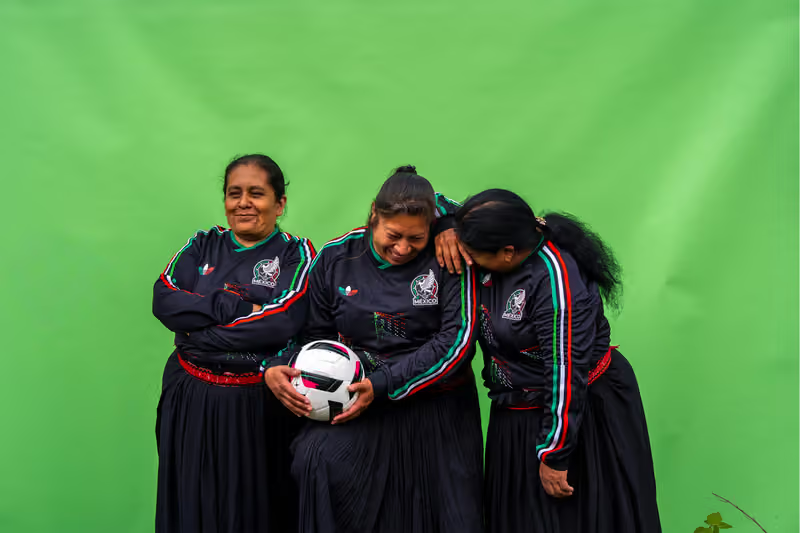
The collection received positive reviews from a design perspective, producing memorable fashion pieces at a time of endless scrolling, when it's increasingly difficult for fashion — especially athletic apparel — to stand out. There were, however, reactions online expressing concern about the conditions in which the artisans worked, and frustration that the embroidery designs were standardized with a different yarn and technique, approved by the corporate partners, and distinct from what these communities are traditionally known to produce. That said, in order to replicate a design thousands of times within tight time constraints, streamlining the process was a practical necessity. When the artisans spoke to the press, they said they were grateful for the opportunity — the hours were flexible and allowed them to spend time with their families. Some noted that when artisan work is scarce, many of them turn to farm labor: long hours, lower pay, and far less time at home.
The Mexico jersey has always been more than a uniform. It has been a canvas onto which generations have projected pride, memory, and belonging. The 2026 edition largely delivers on it. In returning to emerald green, invoking the Piedra del Sol, and stitching Somos México into its seams, the kit offers innovation and recognition.
But the jersey also holds a tension that no amount of beautiful design can fully resolve. The same hands that embroidered its most celebrated third collection belong to indigenous women whose labor, as reports surfaced, was compensated at a fraction of what the finished product commands at retail. The same brand invoking pre-colonial symbolism has faced repeated scrutiny for how it engages — or fails to engage — with the communities those symbols come from. To wear Somos México is to ask, implicitly, who that "we" includes, and how that is being put into practice on the day to day. But these are questions that one jersey cannot answer yet they attempt to unite people answering the question on the surface beautifully. Undeniably, beneath the fabric the answer is more complicated.

.avif)