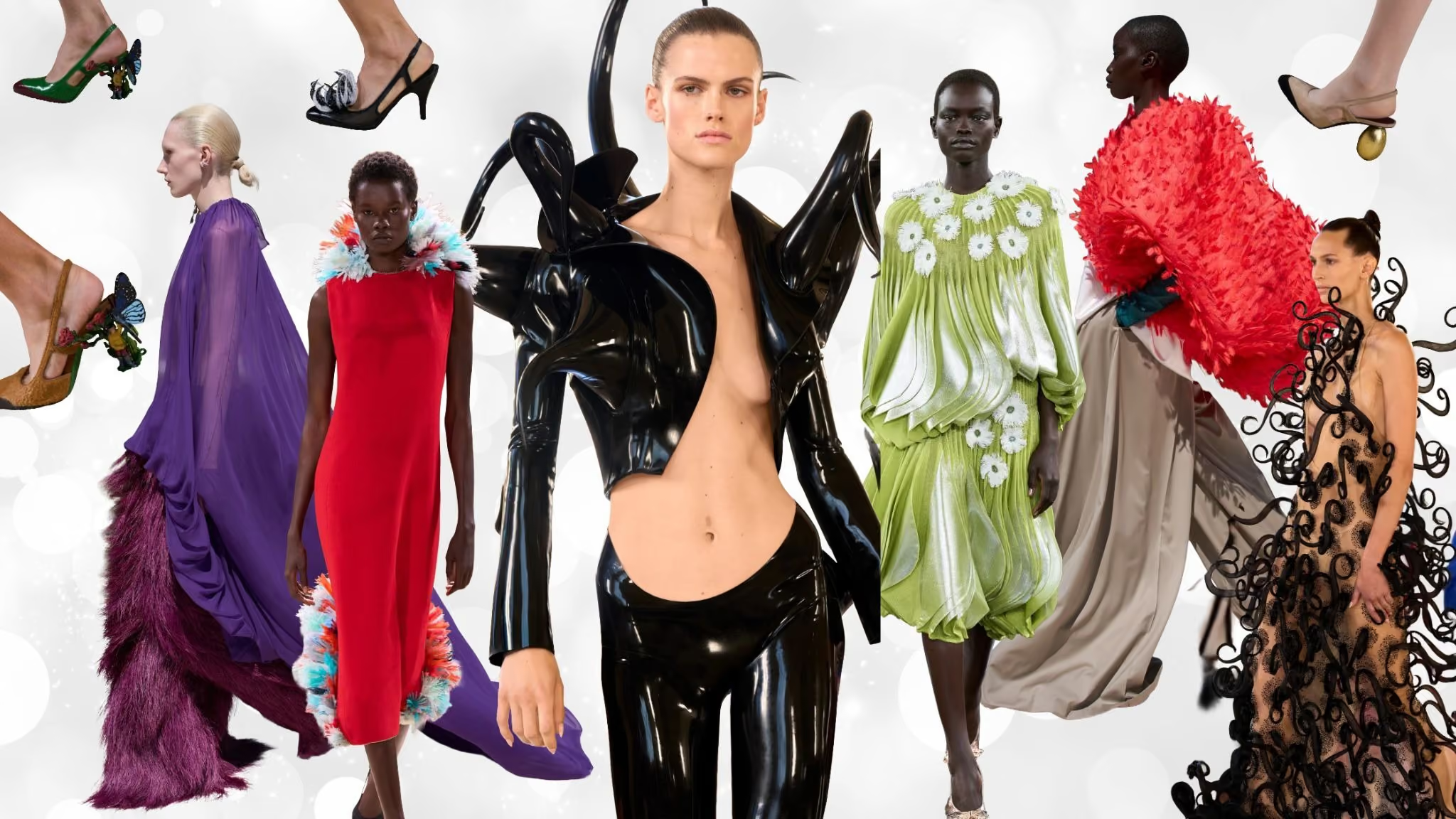
Paris Couture Fashion Week is often described, in the contemporary imagination, as fashion's laboratory: a space where designers are given license to push the boundaries of what fashion is and how it is made. By definition, haute couture refers to exclusive, made-to-measure clothing constructed by hand according to strict, century-old technical standards. Before the Industrial Revolution, this was simply how clothing was made for anyone who could afford it; mass production, and the ready-to-wear industry it eventually gave rise to, did not yet exist.
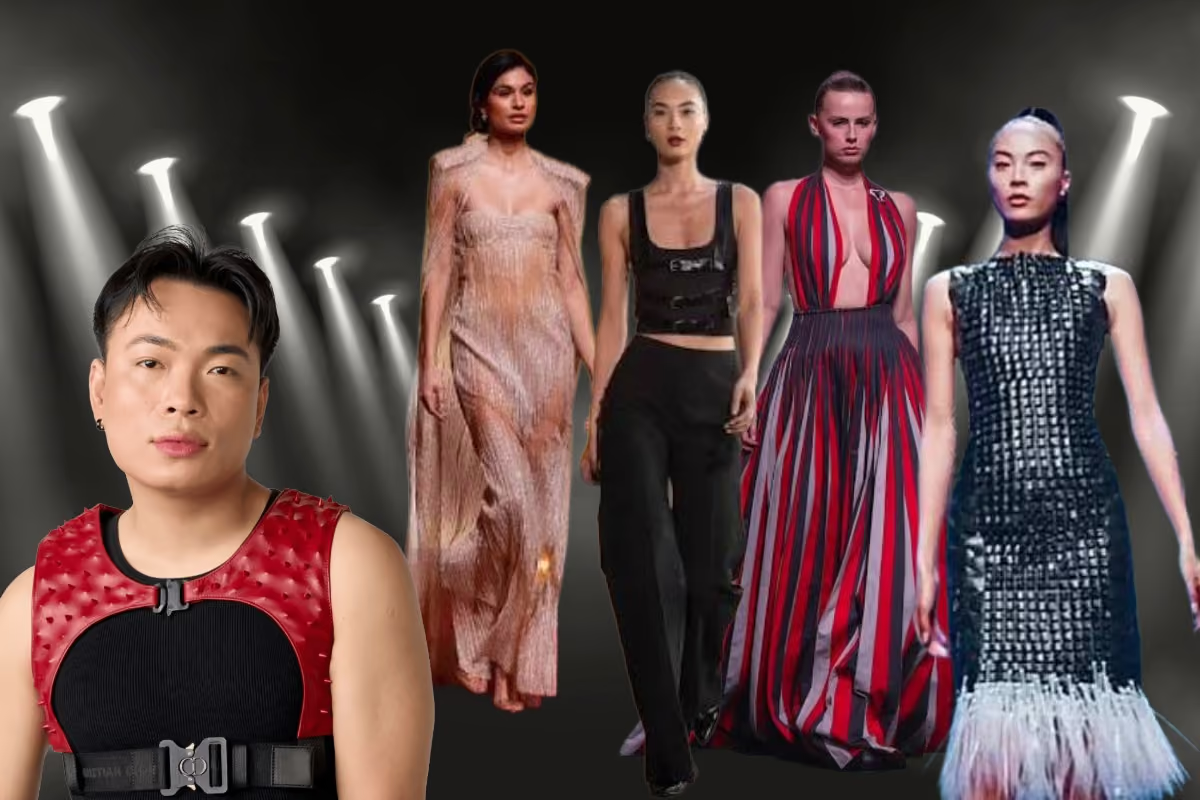
Today, couture serves an entirely different purpose. Although it technically dresses only the wealthiest sliver of the population, couture week has become a powerful engine within fashion's broader attention economy. It gives houses room to experiment loudly: with unrestrained budgets, teams of specialized ateliers, and creative directors free to chase ideas that may never reach a store shelf, couture becomes the clearest expression of a house's ambitions and philosophy. The latest Paris Couture week, brought together roughly thirty maisons across four packed days of runway shows and presentations. This is proof that despite years of economic headwinds, the appetite for craftsmanship at its most extreme remains undiminished. Five houses in particular set the tone for the season: Schiaparelli, Chanel, Dior, Fendi, and Balenciaga, each approaching the same brief: spectacle without compromise from a strikingly different angle.
Schiaparelli
Elsa Schiaparelli, the founder of this French fashion house, was a close friend of the surrealist artist Salvador Dalí. In their lifetimes, they collaborated with and drew inspiration from one another's work, and the legacy of surrealism still prevails at the French house nearly a century after it first opened its doors.
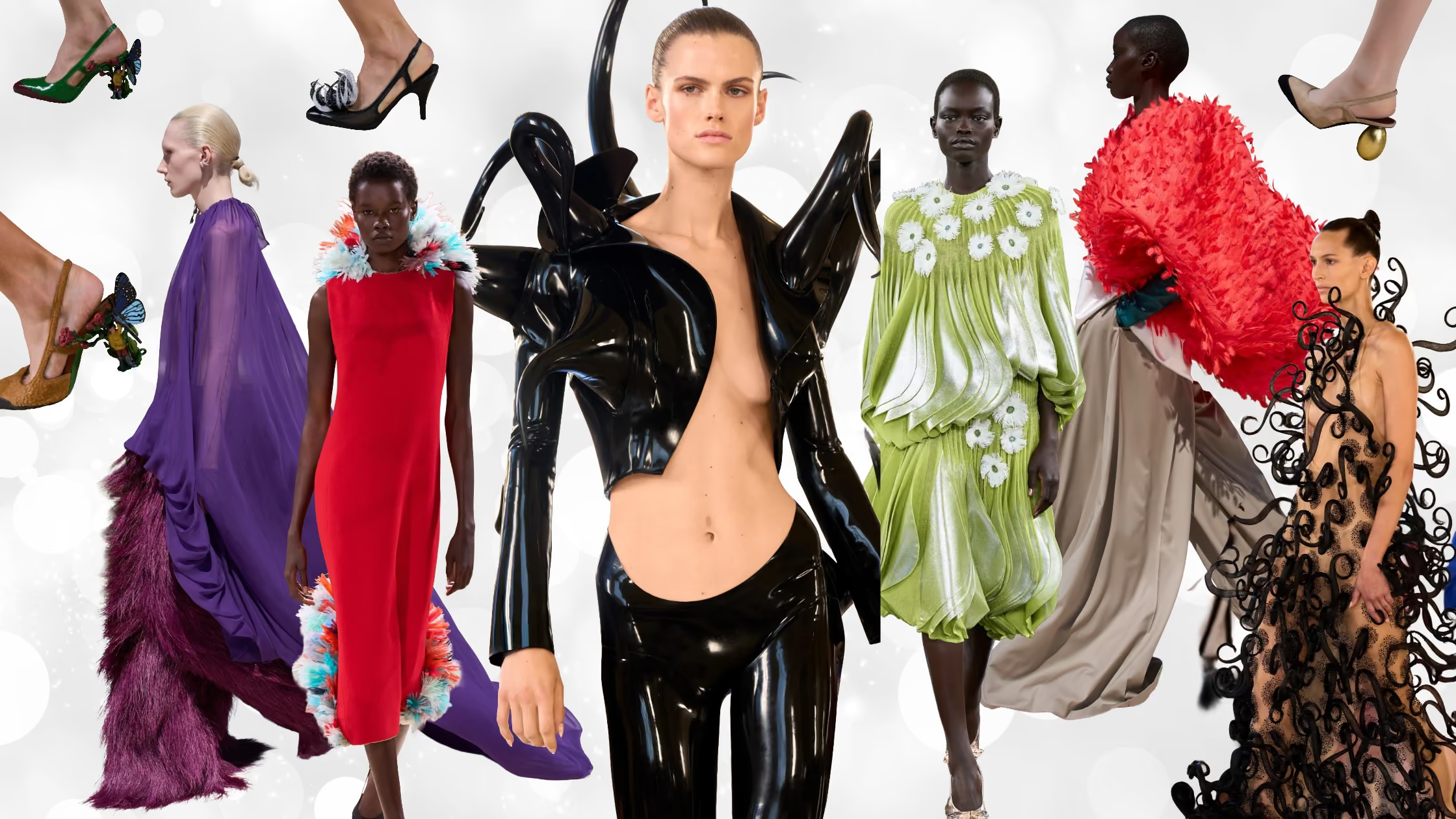
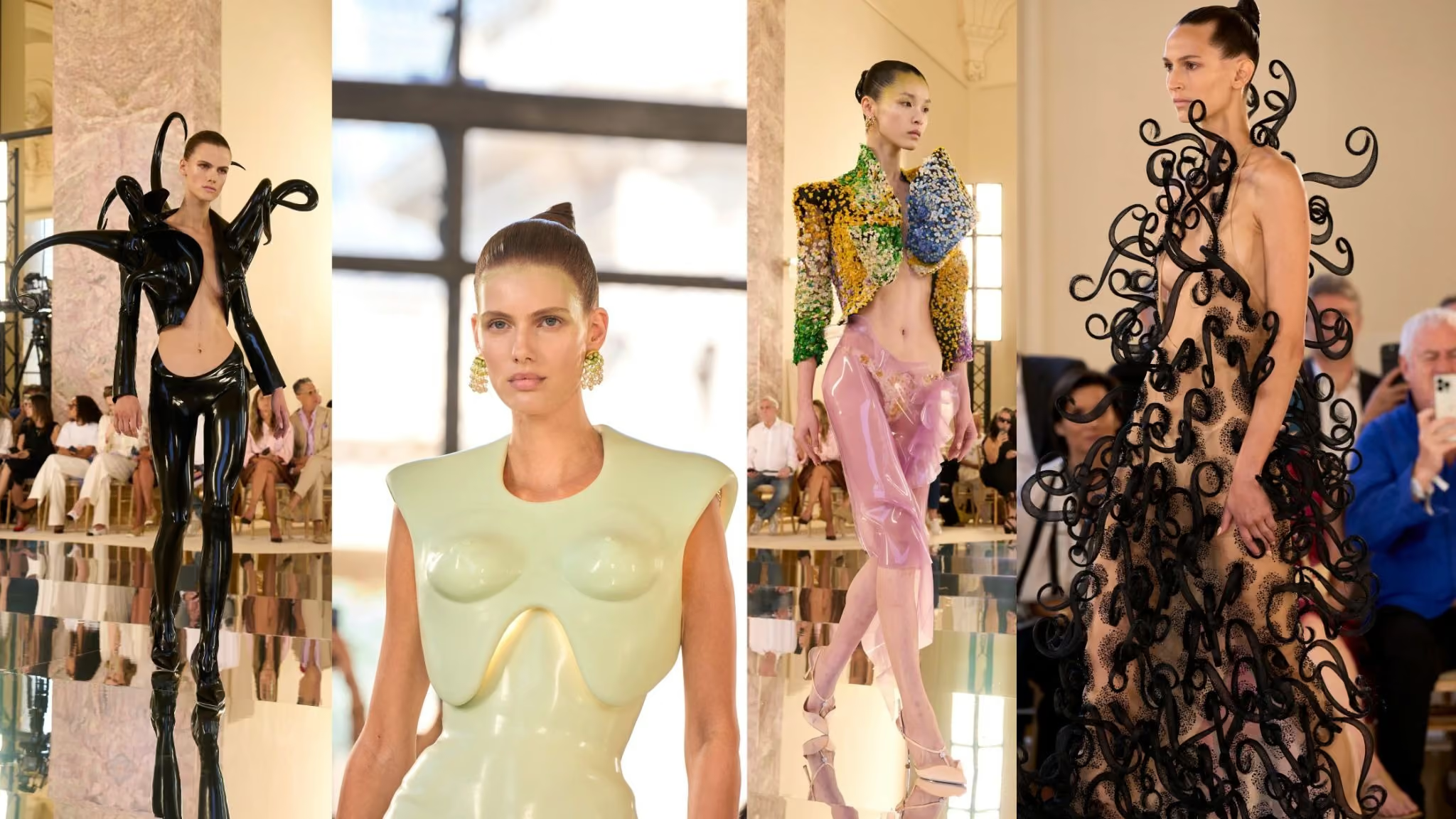
The surrealism at Schiaparelli has evolved for the age of technology. This season, under creative director Daniel Roseberry, latex became a material capable of forming gravity-defying shapes reminiscent of octopus tentacles, while illuminated corsets were fitted with Bluetooth-enabled lighting. The organic silhouettes mixed with synthetic materials read as both mystical and sensual, continuing Schiaparelli's long habit of treating the body as a canvas for the uncanny. Roseberry has built much of his tenure on exactly this kind of moment: garments engineered to be photographed, screenshotted, and argued about online long before they ever reach a client's fitting room.
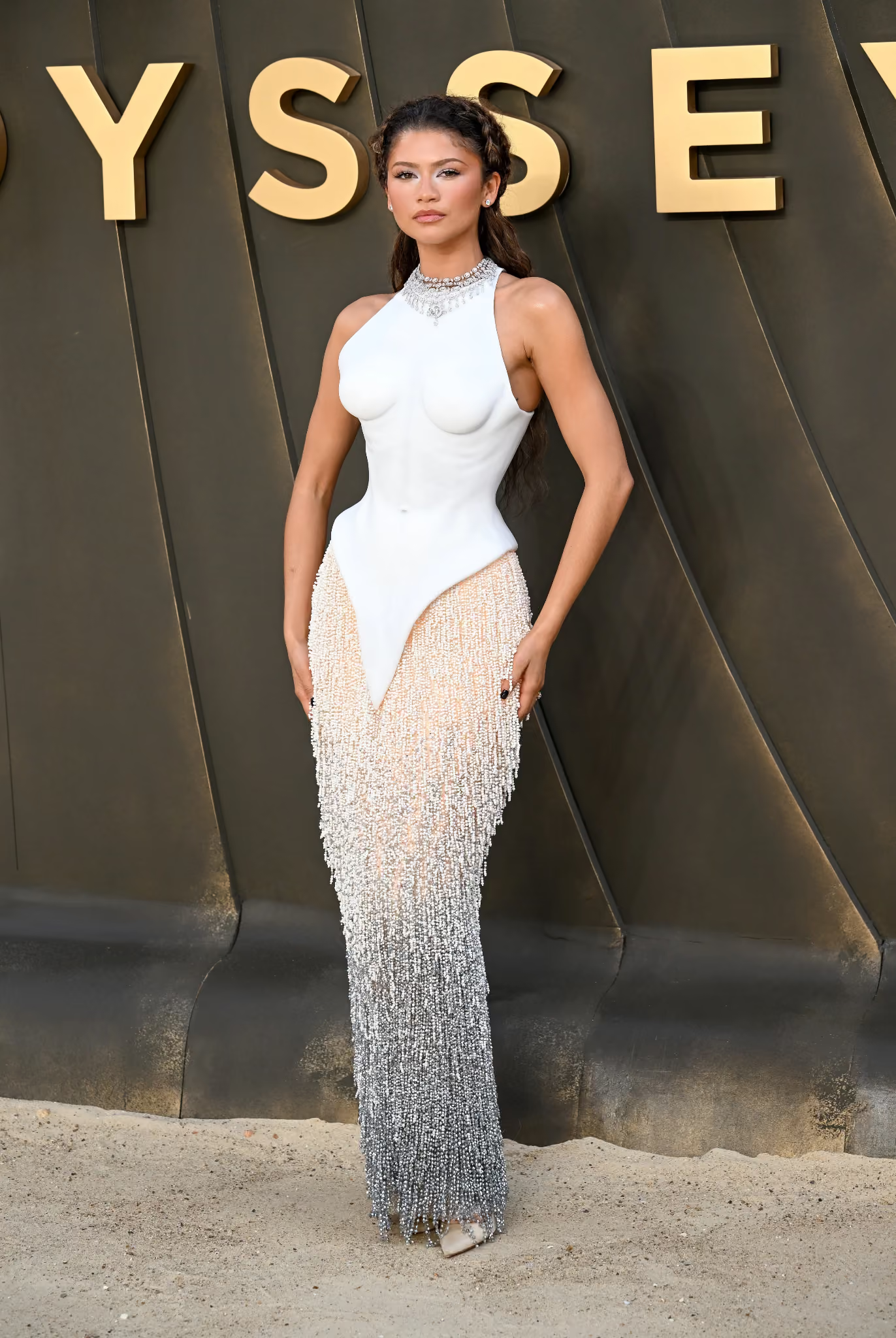
It is worth noting that a sculptural gown from the show closed the runway presentation and was, within hours, on a plane to London from Paris. Zendaya wore the look that same evening for the world premiere of “The Odyssey” directed by Christopher Nolan. It is a molded, porcelain-effect bustier with sculpted anatomical details recalling classical Greek statuary, paired with a shimmering, ombré beaded-fringe skirt that shifted from pearl white to silver. Stylist Law Roach, a Schiaparelli regular and no stranger to this kind of "method dressing," watched the gown close the Paris show from the front row before flying it directly to London on a private jet so Zendaya could wear it hours later, completed with a multi-strand diamond Chopard necklace and a braided updo evoking Athena's helmet. Few moments this season captured couture's theatrical potential, and its usefulness as a marketing tool, quite so vividly.
Chanel
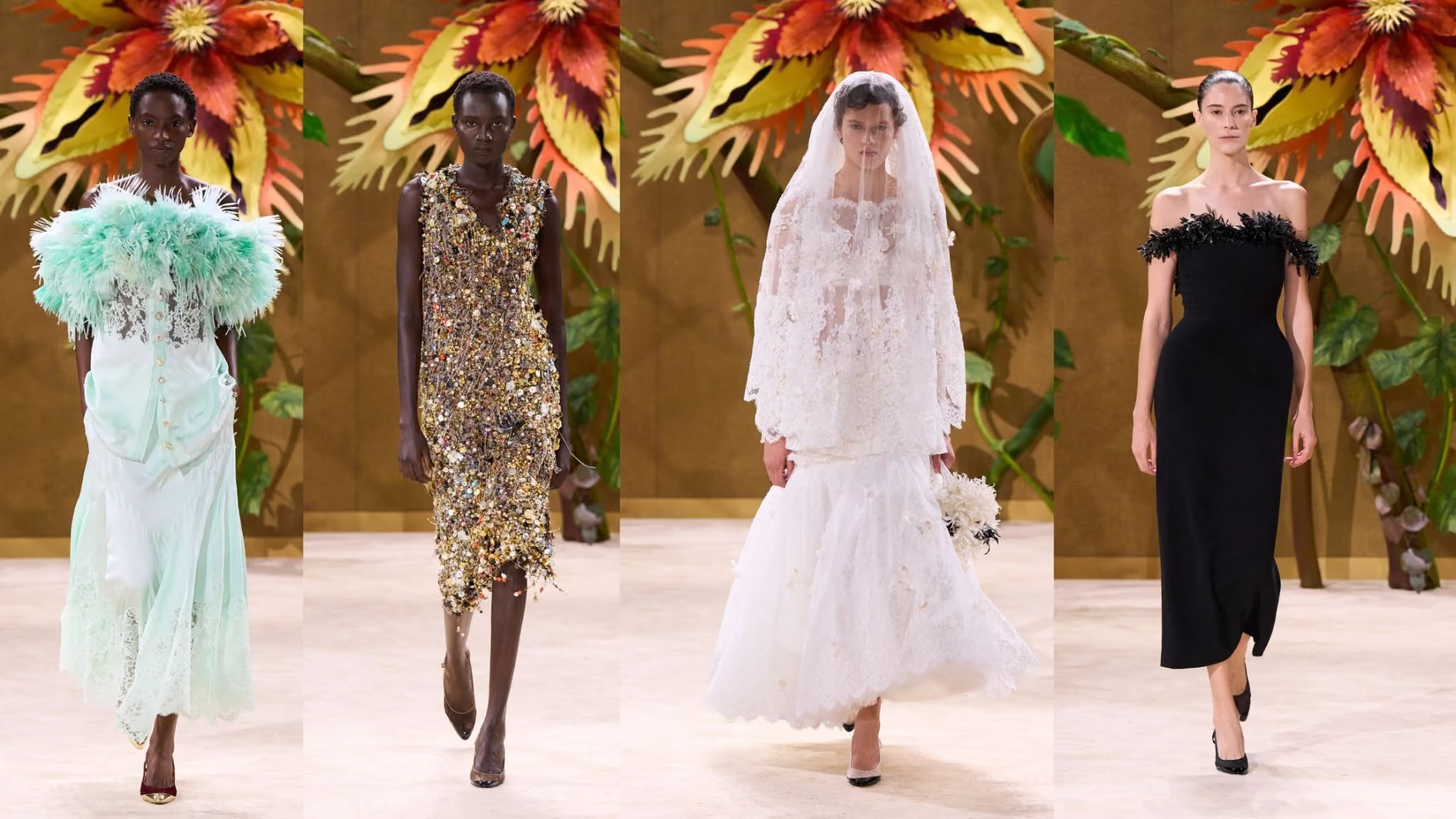
Creative director Matthieu Blazy's inspiration for his second couture show leading the house of Chanel was fairy tales, reimagined for the women of today. Classic fairy tales are full of painfully tight glass slippers, like the one Cinderella dances in at the ball, or corsets cinched beneath voluminous skirts. Blazy's reinterpretation kept the magic while discarding the constraint: tunics, trousers, and embellished shirts stood in for gowns, and climbing vines, beanstalk-inspired heels, and magpie-treasure embellishments nodded playfully to the source material without literalizing it.
There was humor throughout, and even graphic references to specific tales in the footwear, but perhaps the most striking moment came at the close, when Blazy broke a decades-long tradition of ending a Chanel couture show with a bridal gown. A custom wedding dress did appear during the show, but it was not the finale. Instead, the collection closed with a black, off-the-shoulder "revenge dress," a nod to the Christina Stambolian gown Princess Diana famously wore the night Prince Charles admitted to infidelity on television. Blazy explained the choice simply: a wedding was never Gabrielle Chanel's own fairy tale, since she never married, so the show closed instead on a note of self-possession. The message was clear, the women he designs for do not need rescuing, only elegant clothes in which to write their own stories.
Dior
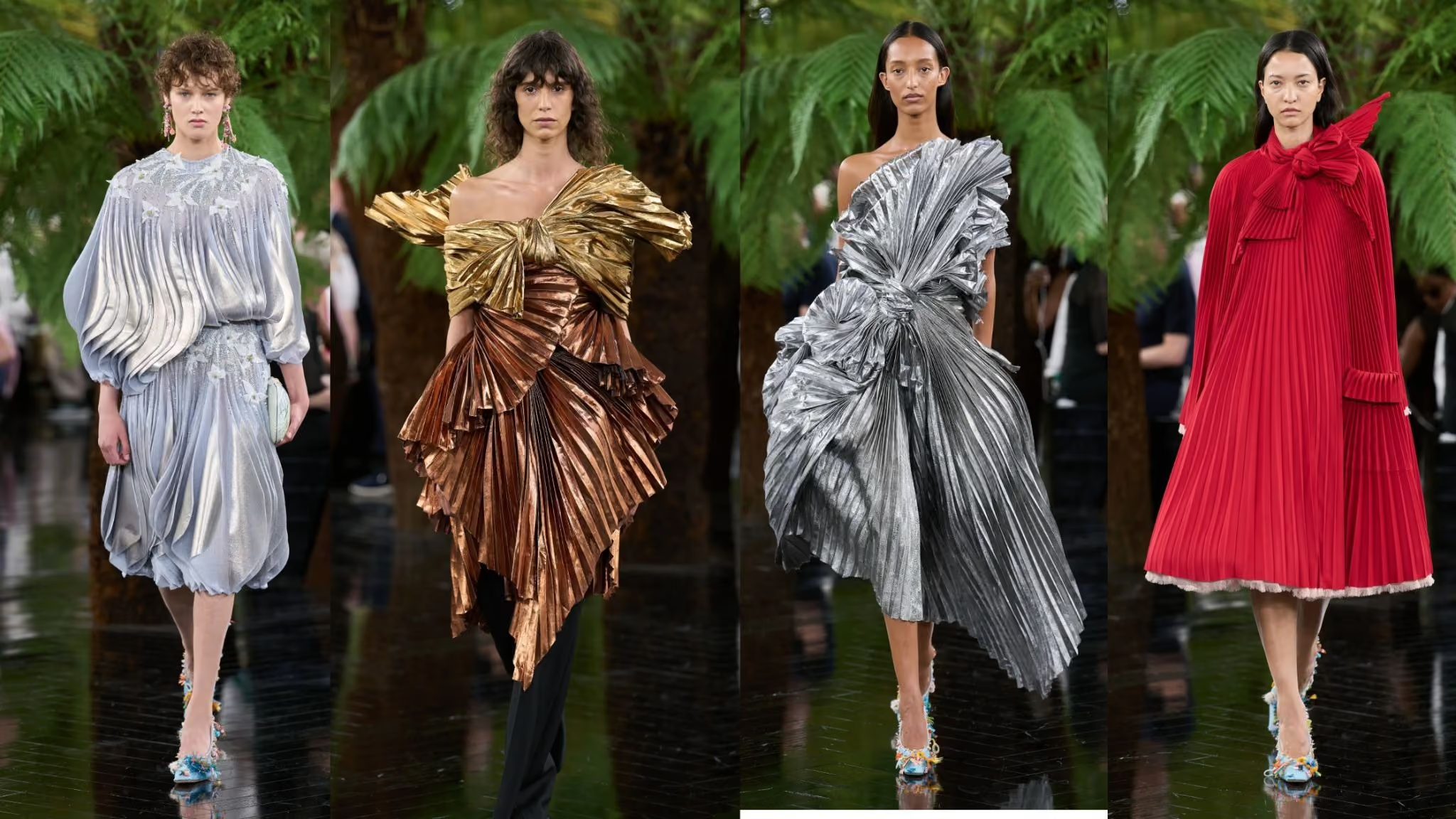
Dior's couture collection offered a clear example of a successful collaboration between fashion and fine art. Creative director Jonathan Anderson followed in the footsteps of his predecessor, Maria Grazia Chiuri, by partnering with a working artist and building the entire collection around an idea larger than either party alone. Staged at the Musée Rodin, the show responded to the work of the American sculptor Lynda Benglis, whose relationship with Anderson dates back to 2022, when she appeared in a campaign for his previous house, Loewe.
Anderson drew specifically from Benglis's late-1970s "Zanzidae: Peacock" series, inspired by the plumage she observed while staying on the Sarabhai family estate in Ahmedabad, India. That research led Anderson deeper into Indian textile traditions, particularly eighteenth-century chintz, fragments of which resurfaced on the house's Petit Dîner and mini Lady Dior bags. The collection paired silver, petal-like pleating, built to make the wearer feel like a living sculpture with deconstructed, draped, and almost melted reinterpretations of Christian Dior's signature New Look silhouette. Benglis herself collaborated directly on several metallic, pleated accessories, including reworked versions of the Dior Cigale, Dior Bow, Lady Dior, and Petit Dîner bags. The presentation was accompanied by "Grammar of Forms," an exhibition uniting the new collection with pieces from the Dior archive and Benglis's own sculptures, several shown in France for the first time.
Fendi
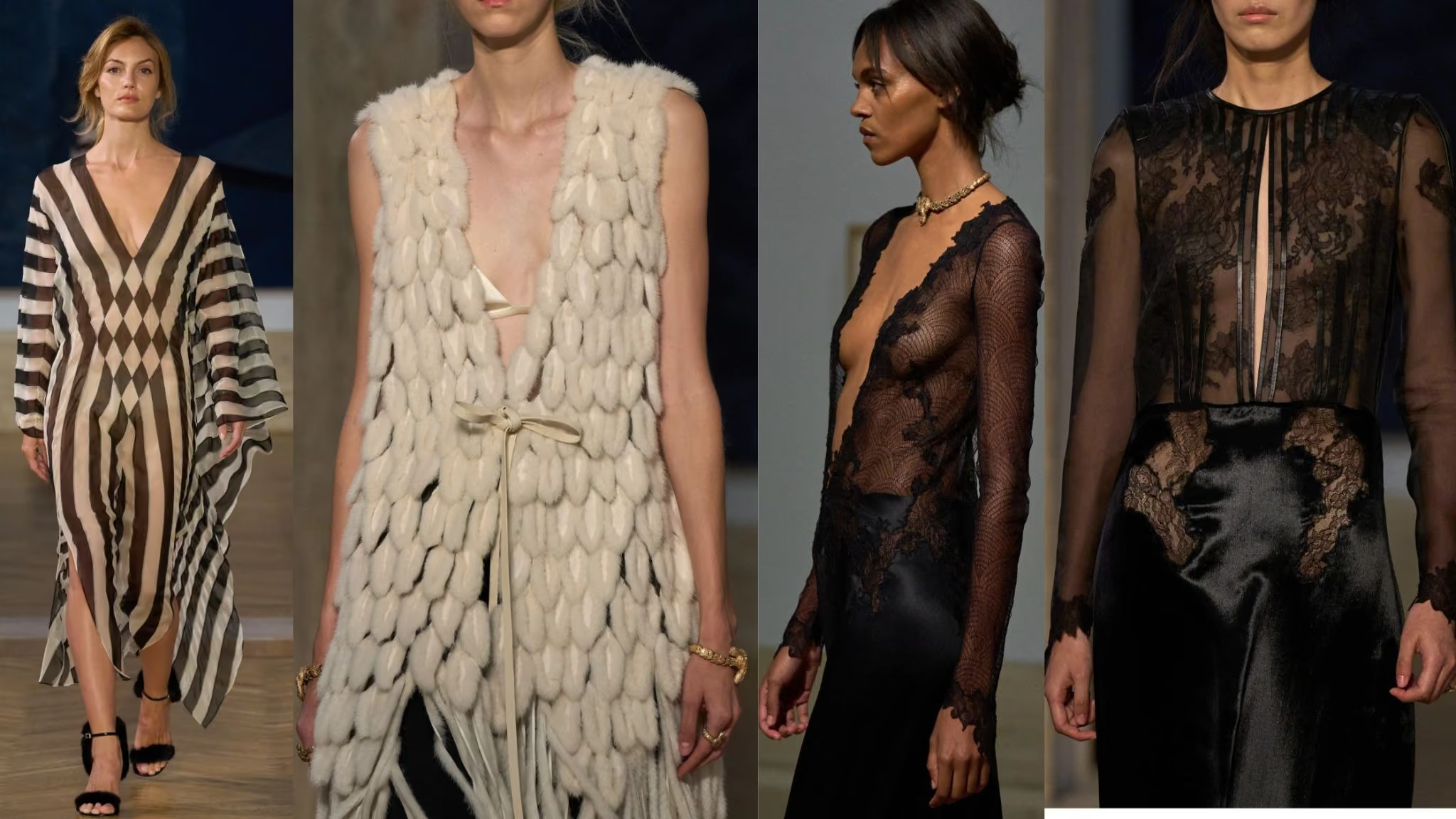
Maria Grazia Chiuri's debut at Fendi couture was among the most anticipated moments of the week. The Italian designer returned to the house after a decade leading Dior, closing a kind of professional circle: she first worked at Fendi in the 1990s, during the development of the now globally recognized Fendi Baguette bag, giving her decades of hands-on expertise with the materials and craftsmanship the house is known for. Chiuri has also spent much of her career as one of the industry's few women at the helm of a major heritage maison, and her return to Fendi was widely read as both a homecoming and a statement of continuity.
The subtlety of Fendi's proposal lives in its details. Textiles that read as lace from a distance turn out, on closer inspection, to be leather or repurposed fur pulled from the Fendi archive. Chevron-patterned dresses look effortless to the eye but demand extraordinary technical skill to construct with such graphic precision. Described by some who saw it as an "indulgence for the body" — something that moves with the wearer rather than constraining her — the collection favored a satisfying monochrome palette lifted by metallic touches. It is, in many ways, a hidden couture, where craft is meant to stay discreet rather than announce itself, offering a quiet contrast to the noise and flamboyance so often rewarded in a hypervisual digital world. True to that instinct for departure, Chiuri chose not to show in Paris at all: the collection was unveiled at an evening show in Rome, at the Galleria Nazionale d'Arte Moderna e Contemporanea.
Balenciaga
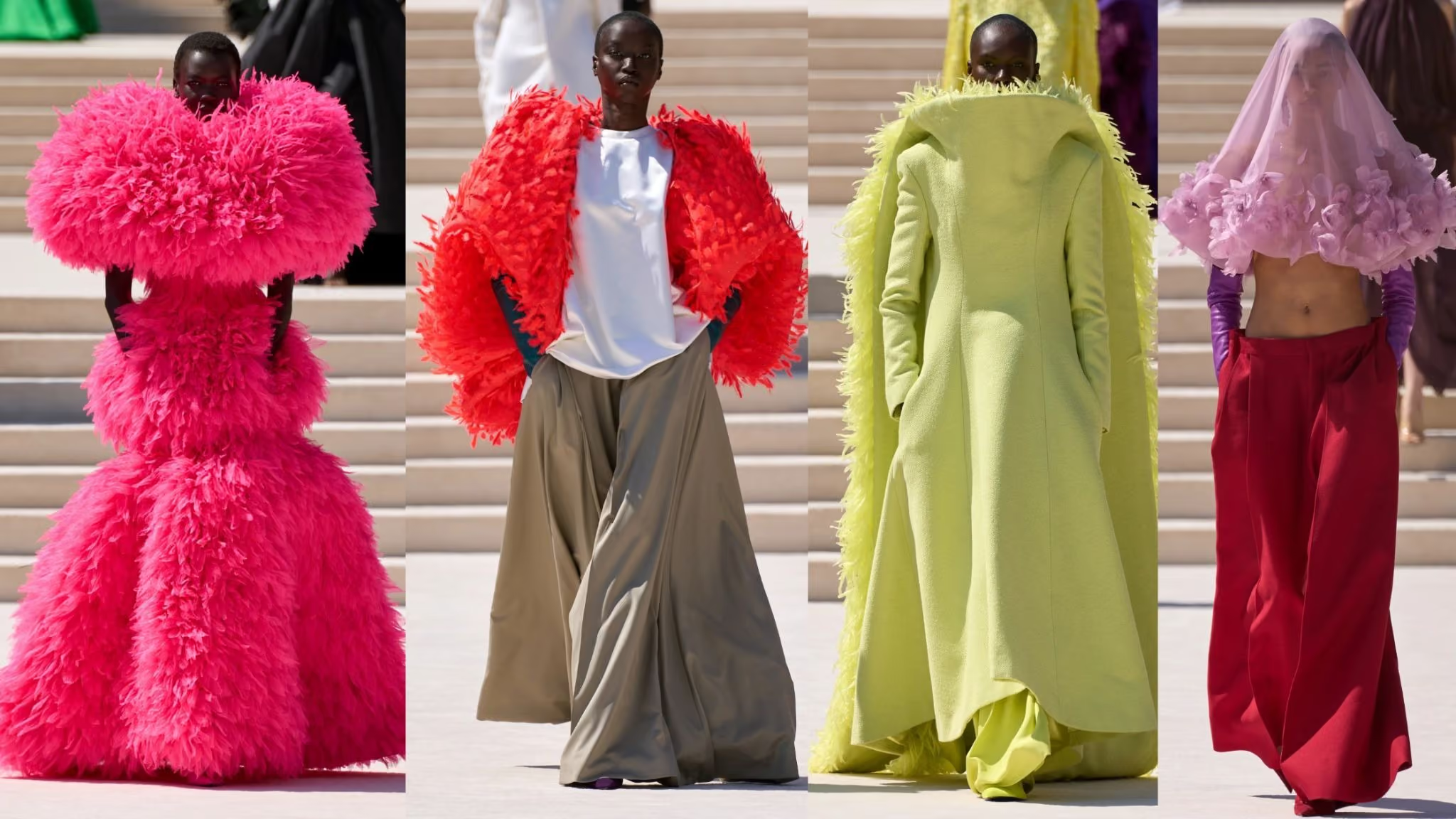
Taste and personality blended together at the couture debut of Pierpaolo Piccioli for Balenciaga. Piccioli is no stranger to the upper register of European luxury fashion, having led Valentino from 2008 until 2024 and created some of that house's most memorable runway moments. Balenciaga, many felt, needed to return to its roots, to the tailoring and rigor that made Cristóbal Balenciaga so exacting a couturier during the 1940s and 50s. Piccioli's first collection, staged on a dramatic staircase at the Cité Internationale Universitaire de Paris, delivered exactly that.
The show revived the balloon silhouette that has defined the house since 1953, working it into jackets and oversized skirts, and reworked a Balenciaga Fall/Winter 1950 dress originally made for Hattie Carnegie into a black evening gown in silk chiffon. Piccioli fused rigorous tailoring with what the French call "flou" soft, fluid drapery pairing sculptural, feathered volumes with energetic color and vibrant styling suited to a hot summer afternoon in Paris. The labor behind the collection was staggering: one bustier dress alone carried 24,150 shredded gazar feathers, while another was covered in 8,000 hand-painted petals, applied one at a time over months of atelier work. The result read as a genuine celebration of the technical devotion couturiers have brought to their craft in France for centuries.
A Turning Point
After years of economic instability and geopolitical strain that have unsettled nearly every corner of the fashion industry, this couture week felt like a breath of fresh air. It marked a break from the reduced silhouettes, muted palettes, and cautious design choices that had dominated recent seasons, largely a byproduct of fashion businesses navigating tariffs, the rise of artificial intelligence in design and marketing, and ongoing conflicts abroad.
The magic of fashion is that the joy embedded in these clothes tends to spill outward, into adjacent industries, creating jobs and a sense that the sector is, on balance, moving in a healthy direction. Some of this season's ideas rhymed with one another: fantasy, craft, and a return to founding house codes recurred again and again, while others stood in sharp contrast. That tension between echo and divergence is precisely what enriches the broader conversation in fashion, giving designers room to push themselves further and giving customers more to be excited about.
Couture matters to the everyday consumer precisely because it is so restricted: a market that less than one percent of the population will ever access, but one that allows designers to pursue new ideas without the constraints of budget or scalability. That freedom is what lets fashion evolve, testing concepts on a Paris runway today that will, in a few seasons' time, be simplified, adapted, and eventually replicated for the mass market that most consumers actually shop for. Seen this way, couture week is less an indulgence than an investment: the industry's clearest bet on where fashion goes next.
.avif)